2026 NBMRF
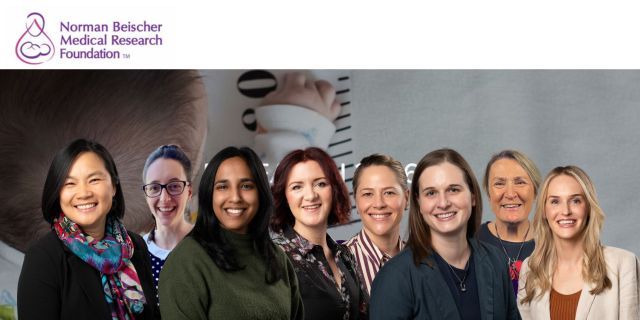
Pictured above Prof Lisa Hui, Ms Cecilia Pynaker, Dr Natasha de Alwis, Prof Natalie Hannan, Dr Anthea Lindquist, Dr Natasha Pritchard, Prof Susan Walker & A/Prof Roxanne Hastie
We congratulate all the Department Obstetrics, Gynaecology and Newborn Health researchers who are recipients of the 2026 Norman Beischer Medical Research Foundation Research Grants.
STEP-CMV: Serological Testing and Education to Prevent CMV Infection in Early Pregnancy
Prof Lisa Hui, Prof Craig Pennell, Dr Hayley Smithers-Sheedy, A/Prof Ines Rio, Dr Natalia Rode, Ms Hanako Stump, Ms Amity Adley, Ms Kath Swinburn, Dr Pieta Shakes
Congenital CMV is the leading infectious cause of disability in newborns. This study will measure infection rates in early pregnancy and embed CMV prevention into GP antenatal care through national education and testing. The results will fill a critical data gap, informing screening policy and empowering families and clinicians to reduce CMV transmission and disability in Australian babies.
Targeted Gene Silencing in the Placenta Using CRISPR/Cas Nanomedicine to Target Anti-Angiogenic Factors in Preeclampsia
This project applies CRISPR/Cas13b gene-editing combined with nanoparticle delivery to silence the placental genes that drive preeclampsia. It represents a first-in-kind RNA-targeting therapy that could transform maternal care and reduce mortality, positioning Australia at the forefront of pregnancy therapeutics.
Implementation of the Foetal Region-Specific Optimised Growth Standard (FROGS)
Dr Natasha Pritchard, Prof Susan Walker, Dr Anthea Lindquist, A/Prof Roxanne Hastie
The FROGS growth chart improves identification of babies at risk of complications such as stillbirth without increasing false positives. This project translates the FROGS algorithm into clinical practice via a digital platform for clinicians and families. Nationwide adoption would standardise foetal growth assessment and target interventions to reduce stillbirths and improve perinatal outcomes.
The HOPSCOTCH Study – Health Outcomes after Prenatal Testing for Sex Chromosome Conditions
A/Prof Sharon Lewis, Prof Lisa Hui, Dr Mary White, A/Prof Alison Archibald, Ms Chloe Hanna, Mr Richard Bradley, Ms Cecilia Pynaker, Dr Jacqui McCoy, Ms Amber Burgess, Dr Peter Kaub, Ms Emma Brown
Prenatal testing now detects more sex-chromosome conditions such as Turner and Klinefelter syndromes, but long-term outcome data are outdated. HOPSCOTCH will create Australia’s first unbiased mother–child cohort to fill that gap. The study will guide counselling, care standards and the creation of a national registry, ensuring evidence-based, family-centred care.
We also celebrate our honorary members:
Surgical Antibiotic Prophylaxis in Gynaecological Laparoscopic Surgery: A Multi-Centre Randomised Trial
Dr Lucy Richards, Dr Charlotte Reddington, Dr Uri Dior, Dr Pinar Cingiloglu, Dr Claudia Cheng, Dr Michal Amir, A/Prof Andrew Daley, Dr W. Catarina Ang, A/Prof Sue Finch, Dr Erin Nesbitt-Hawes, Prof Jason Abbott, A/Prof Martin Healey
Antibiotics are routinely given before laparoscopic gynaecological surgery despite limited evidence of benefit. This international randomised trial will determine whether prophylaxis actually reduces infection risk. Findings will inform global guidelines, promote antimicrobial stewardship and improve surgical safety for women.
Developing a novel RNA-based therapy for Preeclampsia
Dr Katrina Mirabito Colafella, Dr Hareth Al-Wassiti, A/Prof Bill Kalionis
Preeclampsia affects one in ten pregnancies, and remains a leading cause of maternal and perinatal death. This project uses advanced RNA technology to engineer therapeutic microRNAs that restore vascular health and prevent preeclampsia. If successful, it could deliver the first RNA-based treatment for preeclampsia, reducing the need for premature delivery and improving outcomes for mothers and babies worldwide.