Improving women's health outcomes through genomics
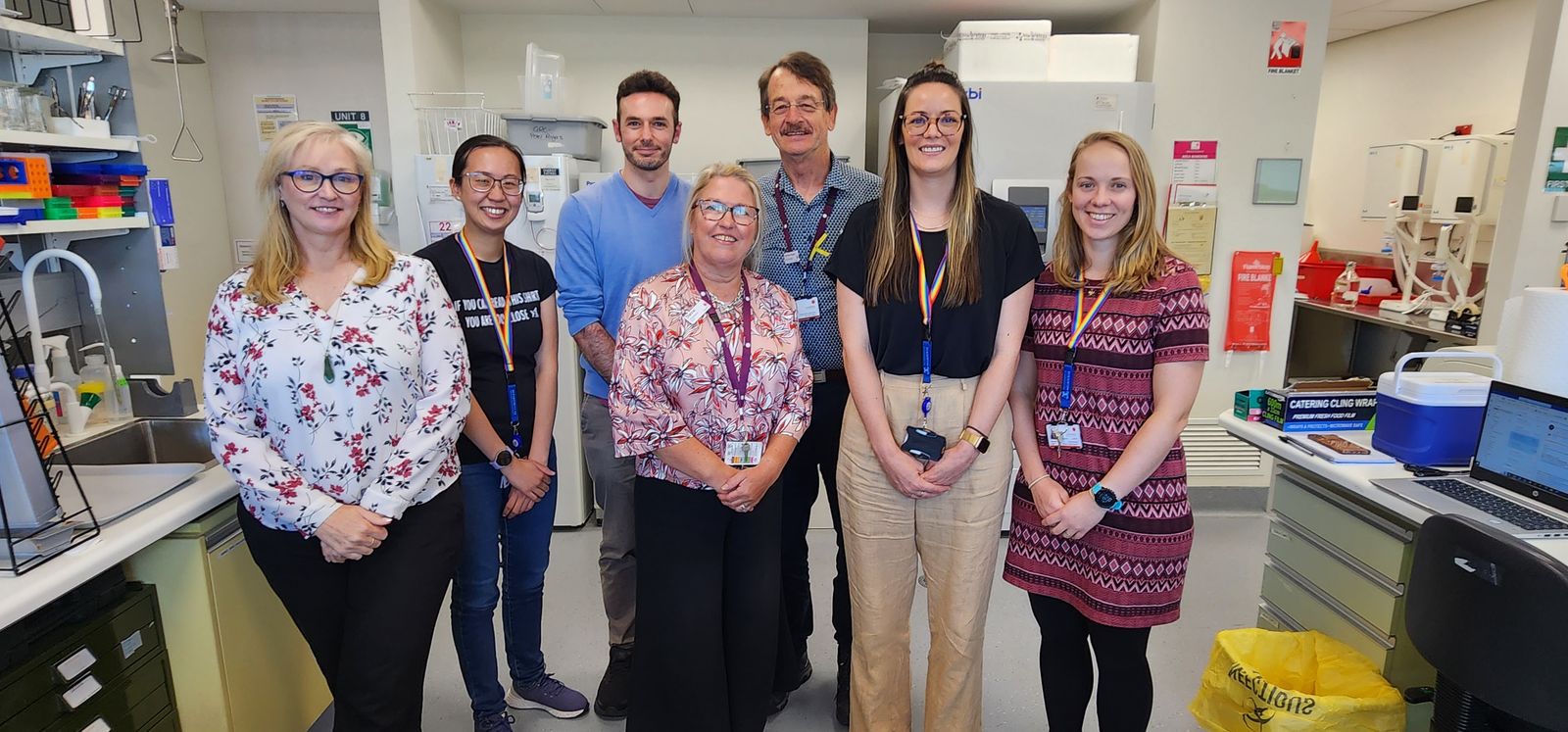 Pictured L-R: Dr Jacqueline Donoghue, Joanna Feng, Chris Cotsopoulos, Dianna Maxwell, Prof Peter Rogers, Emma Morley and Elle Smith
Professor Peter Rogers from the Department of Obstetrics, Gynaecology and Newborn Health leads a team that was awarded funding from The Advanced Genomics Collaboration (TAGC) to perform next generation sequencing to find new solutions for patients with common endometrial related health problems such as abnormal menstrual bleeding, infertility and pregnancy disorders at The Women’s and Mercy Hospital.
The Advanced Genomics Collaboration (TAGC) has awarded the funding to four new Innovation Projects led by University of Melbourne researchers collaborating with partners across the Melbourne Biomedical Precinct.
The four projects will also gain access to powerful DNA sequencing technology in TAGC’s world-leading genomics hub made possible through a partnership between the University and global biotech company Illumina, with support from Invest Victoria.
Nearly all women will experience one or more endometrial related health problems across the course of their lifetime. Despite their heavy burden, many of these issues remain largely understudied.
Professor Peter Rogers’ team at the University of Melbourne Department of Obstetrics, Gynaecology and Newborn Health have developed and patented a novel genomics method for accurately determining the stage of the menstrual cycle.
This research has opened the door to new ways to investigate the lining of the uterus, laying the groundwork for diagnostic and therapeutic solutions to common health problems such as abnormal menstrual bleeding, infertility and pregnancy disorders.
Building on this work, Professor Rogers’ TAGC Innovation Project will recruit and perform next generation sequencing on up to 800 patients experiencing endometrial related health concerns from the Royal Women’s and Mercy hospitals.
Tissues, bloods and detailed clinical data will be stored in an established tissue bank, significantly expanding upon the existing genomics database for a wider range of gynaecological problems.
More information here.