Melbourne suburb-level factors influence maternal and newborn health

Pictured above Prof Lisa Hui & Dr Melvin Marzan
A study led by Dr Melvin Marzan & Prof Lisa Hui from the Department of Obstetrics and Gynaecology and Newborn Health has revealed that key lifestyle, economic and environmental factors at a suburb-level influence the prevalence of maternal and newborn health issues, including overweight, gestational diabetes and babies born large for their gestational age in Melbourne.
The study, ‘Association Between COVID-19 Pandemic Phases and the Risk of Maternal Intensive Care Unit Admission: A Retrospective Analysis of 215,363 Victorian Hospital’ which included 235 postcodes across greater Melbourne, was published in the Australia New Zealand Journal of Obstetrics and Gynaecology.
The study involved analysis of data of 31,083 birth records from 12 public hospitals in Melbourne between 2020-2023. Suburb socioeconomic status, liveability, walkability, fast-food and grocery stores outlet densities and neighbourhood amenities were all considered.
Dr Marzan said the study uniquely combined environmental data with birth records to explore how neighbourhood characteristics influence health at a postcode level.
Dr Marzan, who is also an MCRI Prevention Innovation Research Officer (GenV Fellowship), said the study showed that despite Melbourne’s reputation as one of the most livable cities globally, a significant variation exists in the prevalences of maternal overweight, gestational diabetes, and overweight newborns among suburbs, and that it worsened during the COVID-19 pandemic lockdowns.
“Access to grocery stores and fresh-food stores, increased density of fast-food outlets, walkable areas, and other neighbourhood features play a big role in shaping maternal and newborn health, regardless of a family’s socioeconomic status,” he said.
“COVID-19 lockdowns worsened health disparities, especially in disadvantaged areas, and this research sheds light on how these disruptions impacted maternal and perinatal outcomes.
“The weight of a mother also plays a key role in driving gestational diabetes and large for gestational age highlighting the importance of addressing these risk factors before, during and after pregnancy.”
The research team said the findings indicate health disparities from suburb to suburb, and further point to lessons from the pandemic response, including the need for policies that protect vulnerable and disadvantaged populations.
“Improving access to healthy food, walkable spaces, and healthcare in under-resourced areas can help reduce these health disparities for mothers and babies,” study senior author Professor Lisa Hui said.
“Programs aimed at reducing maternal overweight before and during pregnancy can lower the risks of gestational diabetes and related birth outcomes.”
The research was also covered in an article ‘Postcode lottery means some mothers – and their babies – are more likely to be overweight or obese’ by Wendy Tuohy in The Age 23 March 2025 and features our own Sarah Marcola along with her kids Emily and Sophie.
View a pdf of the story here.
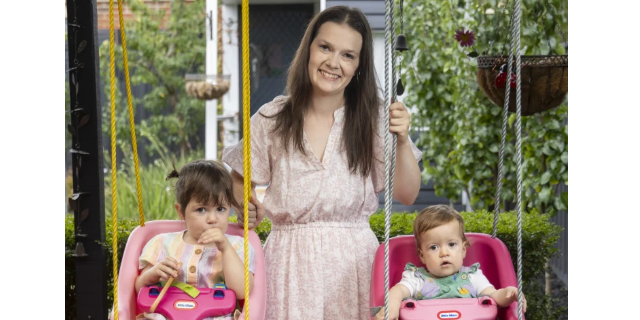 Sarah Marcola with children Emily & Sophie from The Age 23 March 2025. Photo Credit Wayne Taylor
Barrese, M., Marzan, M.B. and Hui, L. (2025), Association Between COVID-19 Pandemic Phases and the Risk of Maternal Intensive Care Unit Admission: A Retrospective Analysis of 215,363 Victorian Hospital Admissions. Aust N Z J Obstet Gynaecol. https://doi.org/10.1111/ajo.13931