Coco Moysey
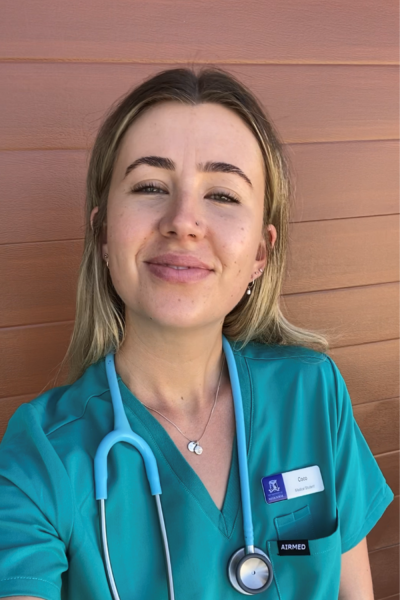
"One of the coolest parts about O&G is that you really have no idea what is going to happen"
Coco Moysey
MD3 Echucha Rural Clinical School
Medical students on the rural pathway experience a three-week placement with the Department of Obstetrics, Gynaecology & Newborn Health in their third year of study in the MD program at the University of Melbourne.
Coco Moysey spent her three weeks at Goulburn Valley Health in Shepparton. Her experience provided opportunities to practice clinical skills and work up patients. Here, she talks about the learning opportunities on an OGN rural placement.
Can you describe a typical day during your rural obstetrics, gynaecology and newborn health rotation?
Typically, you attend an antenatal or gynaecology clinic in the morning where there are opportunities to practice clinical skills such as history taking, examination and workup of patients. There may be the option to perform speculum exams and vaginal examinations where necessary.
Then you may spend the afternoon in another clinic or in theatre (where you could attend a Caesar list or Gynae theatre).
We also had scheduled classes like vaginal birth simulation which was with midwives and obstetricians, and we got to learn how to deliver a baby. We also had a simulation with the clinical nurse educators and consultant gynaecologist, which was a great learning experience.
You also have full days scheduled in the birth suite, and if you’re lucky enough, you can stay with a mum all throughout a birth. The days are long and jam-packed with lots of learning opportunities!
What specific aspects of the placement did you find most interesting?
I found the most interesting part was getting to spend time with the mothers and partners during the births – this time was often spent with the midwives, too, learning from their wealth of knowledge. If you were able to go in during the mornings and introduce yourself to the families, it normally meant you were able to spend the day with them throughout labour and birth.
There is a lot that can be taken away from most placements and O&G was no different to that. The main aspect that I noticed was the advocacy the midwives showed for the women in labour – they ensure the woman feels heard and seen all throughout the birth experience, which provides a lot of reassurance for all involved.
Can you share any memorable experiences that stood out to you during your rotation?
The first birth I was lucky enough to be a part of was a huge highlight; the mum ended up having her baby in 3 pushes – which is very quick! The emotions in the room were high as baby was out so quickly and unexpectedly. I also had to jump out of the way to miss being sprayed with amniotic fluid on babys way out as mums membranes had not yet ruptured.
One of the coolest parts about O&G is that you really have no idea what is going to happen—there is a lot of unexpected turns and unknowns, and the placement definitely keeps you on your toes!
What advice would you give to other students preparing for rural placements in obstetrics and gynaecology?
I would advise other students to do the content before (or at least during) the O&G rotation to ensure you can understand what is going on – women’s health is a huge topic, and there is a LOT to learn, so get started early!
I would also say to make the most of every opportunity given. If a family gives consent for you to be present at a birth, stay and make sure they are comfortable – this is undoubtedly one of the most overwhelming/scary and lifechanging days of their lives, so be gracious with the opportunity and make the most of the experience.