Reflections from the Head of School
As we steam on through the middle of the year, I have been reflecting on the many ways our community continues to create impact beyond the walls of our classrooms, laboratories and hospitals. While education and research remain at the heart of what we do, some of our most meaningful contributions occur when we bring people together to address shared challenges and efforts to improve health outcomes, both locally and globally, through the excellence of our research, education and our people. Several recent activities have reminded me of the strength of these partnerships and the important role universities play in fostering such collaboration, innovation and positive change.
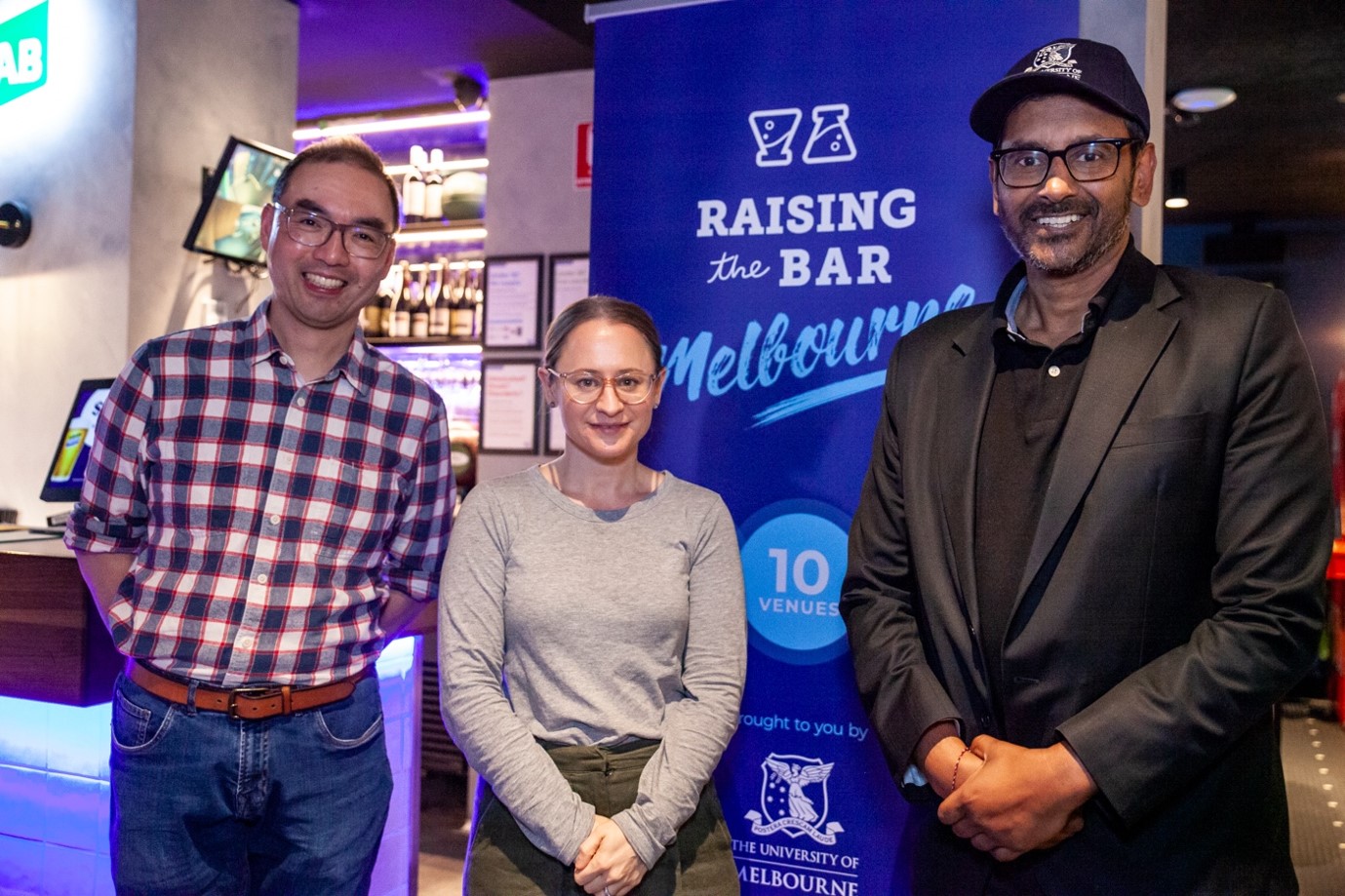
Pictured (L-R): Professor Justin Yeung and Rebecca Eastwood discussed the realistic potential and limits of AI-driven tools to improve cancer diagnosis and outcomes at Raising the Bar, Hickens Hotel. Pictured with Professor Sarath Ranganathan.
One theme that has resonated strongly with me in recent months is the importance of creating spaces for conversation in order to gestate new ideas and innovations. In May, I joined colleagues across the Faculty for Raising the Bar, held as part of our 150th anniversary celebrations. The evening brought researchers and clinicians into community venues across Melbourne to discuss some of the most important issues shaping healthcare today. Our School was well represented, with 9 colleagues speaking across the program: Professor Justin Yeung, Professor Ben Dixon, Dr Renu Eapen, Professor Jason Trubiano, Professor Ada Cheung, Associate Professor Michelle Peate, Enterprise Professor Eugenie Kayak, Associate Professor Leo Chen and Professor Dave Coghill. I was pleased to introduce three of our own colleagues – Professor Justin Yeung, Professor Ben Dixon and Dr Renu Eapen, whose discussions explored the potential of artificial intelligence in cancer care and the growing role of robotic technologies in surgery. The enthusiasm and curiosity of those attending highlighted not only the remarkable pace of technological change, but also the public's appetite to engage with these developments and understand what they may mean for the future of healthcare.
That same month, I participated in the Faculty's Reconciliation Week event, All In: Truth-Telling and Reflections on Dhoombak Goobgoowana. While very different in focus, the discussion reinforced the value of listening, learning and engaging with challenging conversations. Reconciliation requires more than acknowledgement; it requires action, reflection and a willingness to consider how our institutions can contribute to meaningful and lasting change. As educators, researchers and healthcare professionals, we all share a responsibility to help create a more equitable and culturally safe future.
The future of medical education and the health workforce has also been a recurring focus. The North Western Pathway program, developed in partnership with Victoria University, reflects our commitment to creating new opportunities for students from Melbourne's western and north-western suburbs to pursue a medical career. By supporting local students to study medicine and ultimately serve their communities, the program represents an important investment in the future of healthcare in one of Australia's fastest-growing regions.
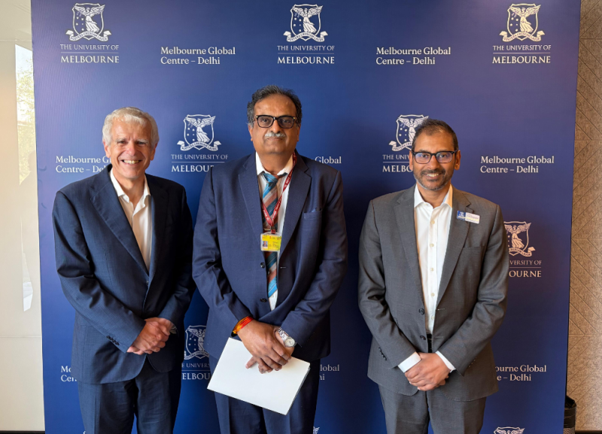
Pictured (L-R): Professor Geoff McColl, Honorary Professorial Fellow Department of Medical Education, Dr Abhijat C. Sheth, Chairman National Medical Commission India and Professor Sarath Ranganathan, Head of Melbourne Medical School.
These themes extended beyond Australia during the Understanding the Evolving Landscape of Medical Education in India: Vision 2035 symposium held at the University of Melbourne’s India Global Centre in New Delhi, which brought together leaders from education, healthcare and policy to discuss how medical training must evolve to meet changing community needs. The discussions highlighted challenges shared by health systems around the world and the value of partnerships towards preparing future clinicians to work in increasingly complex and rapidly changing environments. These themes were explored further in my interview with Express Healthcare, India’s foremost Healthcare magazine.
Further, discussions with representatives from the University of Hong Kong's Li Ka Shing Faculty of Medicine explored opportunities to strengthen collaboration in education, student mobility and research, building on an already strong relationship between our institutions. I was also privileged to participate in discussions with His Excellency Mr Nagesh Singh, High Commissioner of India to Australia, during his visit to the University. Together, these conversations again highlighted the value of international collaboration in advancing education, research and innovation.
Closer to home, the Financial Markets Foundation for Children Research Symposium showcased the impact that can be achieved when researchers, clinicians, philanthropic organisations and early-career investigators work towards a shared goal. The event hosted academics supported by the Foundation from the University of Sydney, the University of New South Wales and Monash University, serving again as a powerful reminder that many of our most important advances in healthcare are made possible through collaboration and a collective commitment to improving lives. Congratulations to all involved in the event.
I also extend my congratulations to colleagues recognised in this year's King's Birthday Honours. Their achievements reflect the extraordinary contributions made by members of our community to health, education, research and public service.
As we move into the second half of the year, I look forward to seeing how these conversations, partnerships and initiatives continue to shape the future of our School and the communities we serve.
Best regards,
Professor Sarath Ranganathan
Head of the Melbourne Medical School