Highlights from the International Society for Gastrointestinal Hereditary Tumours (InSiGHT) conference
Romy Walker, Research Officer in the Colorectoral Oncogenomics Group, shares the highlights and latest research presented at the InSiGHT 2024 conference.
The 10th biennial meeting of the International Society for Gastrointestinal Hereditary Tumours (InSiGHT), held on the 19th-22nd of June 2024 in Barcelona, Spain, brought together over 350 attendees from 18 countries consisting of genetic counsellors, medical practitioners, physicians, nurses, students, residents, and research scientists. The scientific congress focused on “the world-wide improvement of care of patients and families with hereditary gastrointestinal cancer syndromes and early-onset colorectal cancer”.
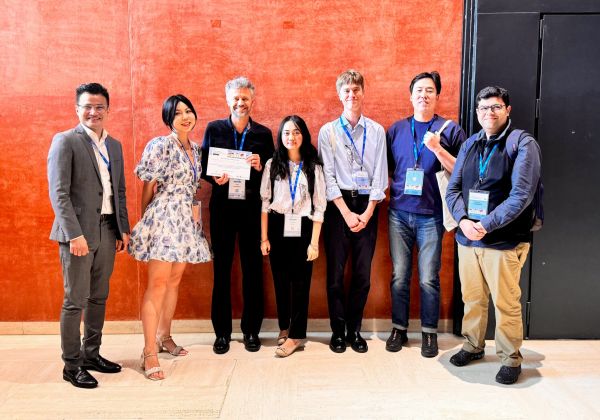
The Colorectal Oncogenomics Group (COG) team, including three PhD students and two ECRs, had an important representation at the meeting, with eight oral presentations and four poster presentations, highlighting diagnostic and translational research on Lynch syndrome, Serrated Polyposis Syndrome, the POLD1, MUTYH and NTHL1 polyposis syndromes and the causes of unexplained polyposis. A highlight of the team’s work was the award to Dr. Peter Georgeson for the best oral presentation at the meeting. Congratulations Peter!
Associate Professor Daniel Buchanan was selected as one of five newly appointed InSiGHT council members. This council provides guidance to InSiGHT to reach its goals through two council meetings each year.
The meeting commenced with an information session for patients and patient representatives with Lynch syndrome or Polyposis, on the latest developments in colonoscopy interventions and life after colectomy.
A key cornerstone of the InSiGHT organisation's activities has been leading the development of gene-specific variant classification criteria. The InSiGHT-ClinGen Variant Classification Expert Panel (VCEP) for hereditary colorectal cancer and polyposis genes met to discuss progress on current gene-specific ACMG rules and guidelines for established CRC/polyposis genes and detail the next three years of work to expand the list of genes and improve the ability to bulk classify variants. The COG team is an active contributor to several of the sub-VCEP panels including for the DNA mismatch repair genes, APC, and MUTYH genes, and is leading the efforts for variant classification in POLE and POLD1 genes.
The main meeting covered clinical aspects including surgical and endoscopic challenges, advances, and new discoveries in basic research. Several highlights included research on mutational signatures and the somatic evolution in normal tissue, the clinical utility of artificial intelligence in pathology and endoscopic procedures, monogenetic defects, and polygenic risk scores. In the last sessions of the conference, the current status of human vaccine clinical trials, chemoprevention, and lifestyle modifications were addressed. Several interactive debates on key hot topics highlighted differences in clinical opinion and management between countries and leading clinical experts.
The conference was highly informative and provided an opportunity to meet with so many international colleagues and establish new connections. It was great to showcase some of the leading international hereditary gastrointestinal research undertaken by COG within the UMCCR.