Building the future of medical education through simulation in Mongolia
From strangers to teaching teams: an international partnership is helping transform medical education through simulation in Mongolia. The University of Melbourne, the Mongolian National University of Medical Sciences (MNUMS), and colleagues from New Zealand have established a collaborative educational initiative that strengthens local expertise in simulation-based education and international partnerships in health professions education.
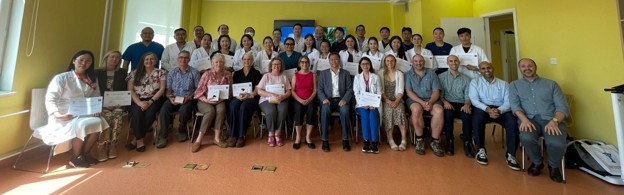
Educators from three countries came together to strengthen simulation-based medical education through a shared commitment to educational excellence
What happens when clinicians and educators from three countries come together with a shared goal of improving medical education?
By Dr Amanda Baric, Department of Critical Care and Department of Medical Education, Melbourne Medical School, Faculty of Medicine, Dentistry and Health Sciences, University of Melbourne
In June 2026, educators from the University of Melbourne joined colleagues from the Mongolian National University of Medical Sciences (MNUMS) and New Zealand to deliver an intensive simulation educator program that is helping build a new generation of simulation faculty in Mongolia. Months of hard work by faculty from New Zealand, Mongolia, and Australia came to fruition in Mongolia's capital, at the largest public medical school, where they taught future Mongolian doctors through simulation.
The three-day faculty development course brought together 36 medical educators from across MNUMS, representing specialties including critical care, emergency medicine, surgery, paediatrics, medicine, psychiatry, cardiology and ophthalmology. Together, they explored how simulation can move beyond teaching technical skills to develop clinical reasoning, communication, teamwork, and psychologically safe learning environments.
The initiative is part of the growing partnership between Melbourne Medical School and MNUMS, established through a Memorandum of Understanding in 2025, reflecting a shared commitment to strengthening health professional education through sustainable international collaboration.
"Our goal has never been simply to teach simulation. It has been to work alongside our Mongolian colleagues to develop local educational leaders who will shape the future of medical education in Mongolia. The most rewarding part of this program has been seeing educators gain the confidence to teach, mentor others, and ultimately lead the next generation of simulation faculty." Dr Amanda Baric
Faculty from the Department of Critical Care worked alongside colleagues from the Department of Medical Education, experienced Mongolian simulation educators, and collaborators from New Zealand to deliver the program. Importantly, Mongolian faculty who had completed prior training returned as mentors and facilitators, demonstrating the initiative's growing sustainability and the emergence of local educational leadership.
Participants learned by designing, delivering, and refining their own simulation scenarios. Working in multidisciplinary teams, they developed authentic clinical cases, then facilitated them with volunteer medical students and received structured feedback from experienced educators and the students themselves.
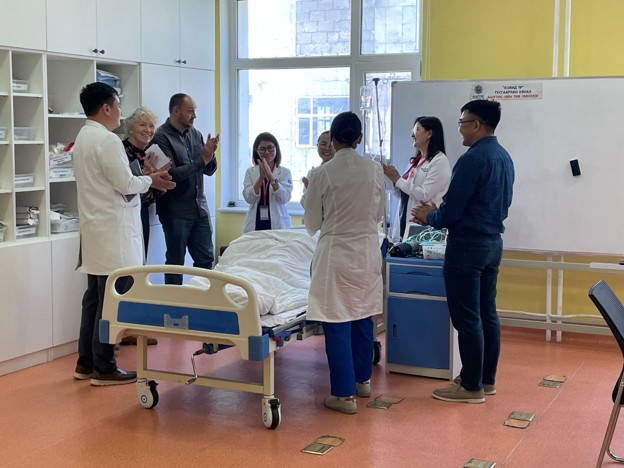
Participants developed and facilitated specialty-specific simulation scenarios, receiving coaching and feedback from experienced educators, Dr Jennifer Keast (RMH), Dr Neil MacDonald (The Women’s and Northern Hospitals)
The students' reflections reinforced one of the program's most important messages: effective simulation is not defined by sophisticated technology, but by creating an environment where learners feel safe to think, communicate, make decisions, and learn from mistakes.
"Simulation, together with structured and psychologically safe feedback, helped us learn better and reduced the anxiety of being taught by senior staff."–Medical student participant.
Students also highlighted the realism of the scenarios, the opportunity to practise communication and teamwork under pressure, and the supportive facilitation that encouraged participation and reflection. Their feedback was presented directly to the newly trained educators, providing valuable insights to further refine their teaching practice.
Beyond developing simulation skills, the program fostered something equally valuable: collaboration. Educators from departments that had rarely worked together quickly became cohesive teams, sharing ideas, solving problems, and supporting one another as they embraced new approaches to teaching.
"One of the greatest strengths of the course was watching participants from different departments become efficient teams in just three days."
That transformation reflects one of simulation's greatest strengths—not only preparing future healthcare professionals for clinical practice but also developing the teamwork, communication and mutual trust that underpin safe patient care.
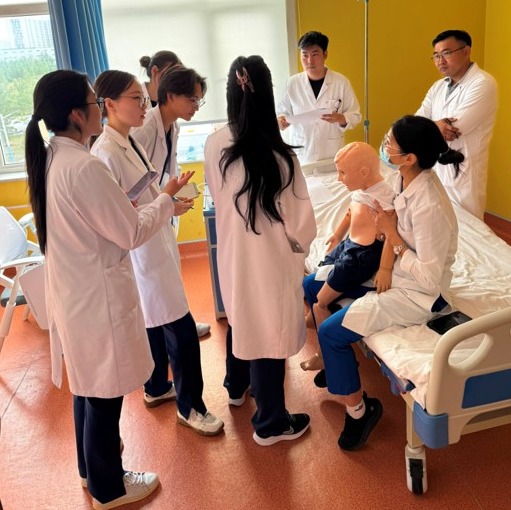
Newly trained simulation educators led scenarios with volunteer medical students, marking an important step towards locally led simulation education
As MNUMS continues to embed simulation throughout its medical curriculum, the emphasis is increasingly shifting towards locally led delivery. Australian and New Zealand faculty will continue to support this transition while experienced Mongolian educators take on expanding leadership roles in training future faculty and integrating simulation across the curriculum.
This collaboration exemplifies the University of Melbourne's commitment to global partnerships that strengthen healthcare education through capacity building. The Department of Critical Care is proud to contribute to this work and gratefully acknowledges the leadership, educational expertise, and ongoing support of the Department of Medical Education.
This between-country partnership demonstrates how international collaboration, educational scholarship, and a commitment to developing local leadership can create lasting improvements in healthcare education.
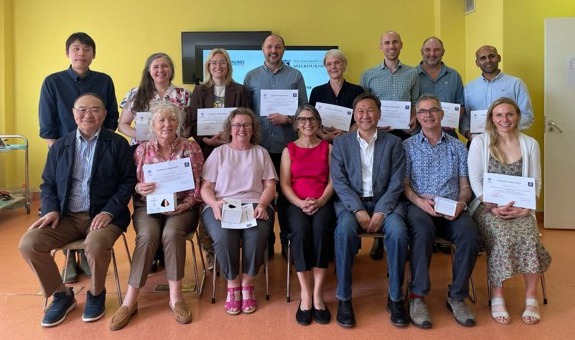
Back row: Dr Andrew Huang , Dr Suzy Cook, Dr Sophie Lee, Dr Neil MacDonald, Dr Alison Jarman, Dr Benjamin Peake, Dr Dan Hartwell, Dr Rafiqu Shabiyulla. Front row: Prof Ganbold Lundeg (MNUMS), Dr Jennifer Keast, Dr Pip Wills, Dr Amanda Baric, Prof Enkhtur Yadamsuren (MNUMS), Dr Roni Krieser, Dr Elizabeth Hall