NBMRF Clinical Fellow 2027-2029 - Dr Natasha Pritchard
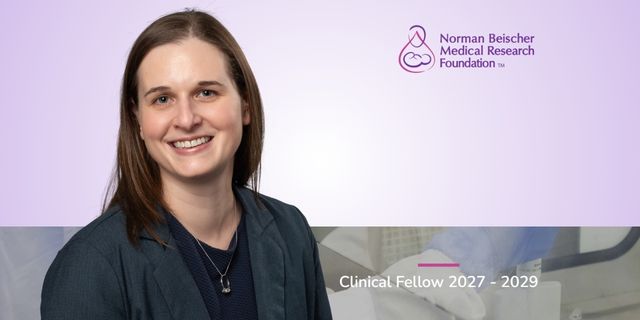
Pictured Dr Natasha Pritchard
Congratulations to Dr Natasha Pritchard Senior Research Fellow in Department Obstetrics, Gynaecology and Newborn Health for being awarded the Norman Beischer Medical Research Foundation 2027–2029 NBMRF Fellow. The Fellowship will provide funding over three years to advance Dr Pritchard's research programme, “Precision foetal growth assessment: the right baby, the right care, the right time.”
Dr Pritchard is based in The Dept OGN at Mercy Hospital for Women, where she will combine protected research time with clinical practice as she transitions to consultant obstetrician‑gynaecologist.
Clinicians and midwives routinely face the high‑stakes question of whether a baby is safer remaining in the womb or being born early: when the placenta begins to fail and a baby does not grow as expected, stillbirth risk rises, and timely detection, close monitoring and planning birth at the right time can almost halve that risk, yet birth is the only definitive treatment and unnecessary early delivery can also cause harm. Natasha’s research tackles two linked challenges — measuring foetal size consistently and interpreting what that size means for the individual pregnancy — aiming to better identify babies who will benefit from extra surveillance or earlier birth while avoiding unnecessary intervention for lower‑risk infants.
A major foundation for Natasha’s Fellowship is the Fetal Region-specific Optimised Growth Standard (FROGS), a free, open-source standard developed to address important weaknesses in current growth charts. FROGS is calibrated to Australian population data, adjusts for fetal sex, assigns an exact centile for each gestational day, and can be used consistently before and after birth.
FROGS was validated against stillbirth and other adverse outcomes in a statewide cohort of more than 750,000 births and compared with three widely used alternative approaches. All four charts classified a similar proportion of babies as small; FROGS’ advantage came from identifying babies at greater risk. It is now published, validated in Australia and ready for implementation.
The Fellowship will now move FROGS into practice. Natasha will audit more than 250 pregnancies to quantify the consequences of inconsistent chart use, refine clinician and consumer tools through surveys, interviews and usability testing, and implement FROGS across Mercy Hospital for Women, Werribee Mercy Hospital and Northern Hospital. The team will evaluate uptake, trust, correct use and workflow to understand what is needed for sustained implementation at scale.