The lived experiences, perspectives and priorities of patients are front and centre for research students in the Department of Clinical Pathology.

“I think that our health system, as a whole, isn’t really patient-centred. It’s more centred on the clinician and the practitioners, rather than on the patient,” says Professor Frederic Hollande, Head of the Department of Clinical Pathology.
If you want to create a patient-centred healthcare system, that starts with how you teach medical and research students, and that is why we embed patients with lived experience in workshops with our students.
Professor Hollande has long been a passionate advocate for ensuring those who work within the healthcare system genuinely listen to the voice of their ‘consumers’ — the patients who are living with illness and disease.
In 2020, the Department of Clinical Pathology, within the Melbourne Medical School, began bringing Honours students and patient representatives together to help students recognise why the patient experience is vital at all levels of research.
That initiative has continued to grow with patients, mostly impacted by cancer, brought into workshops to collaborate with small groups of research students. They share their personal story, frankly discuss the impacts of their illness and explain what they see as a priority in their healthcare experience.
The Department has also produced a series of vodcasts featuring researchers, medical professionals and patients discussing why medical research is important.
In the workshops with patients, students learn how to clearly communicate their research ideas and they confront any preconceptions they have about what is of importance to patients, says Professor Hollande.
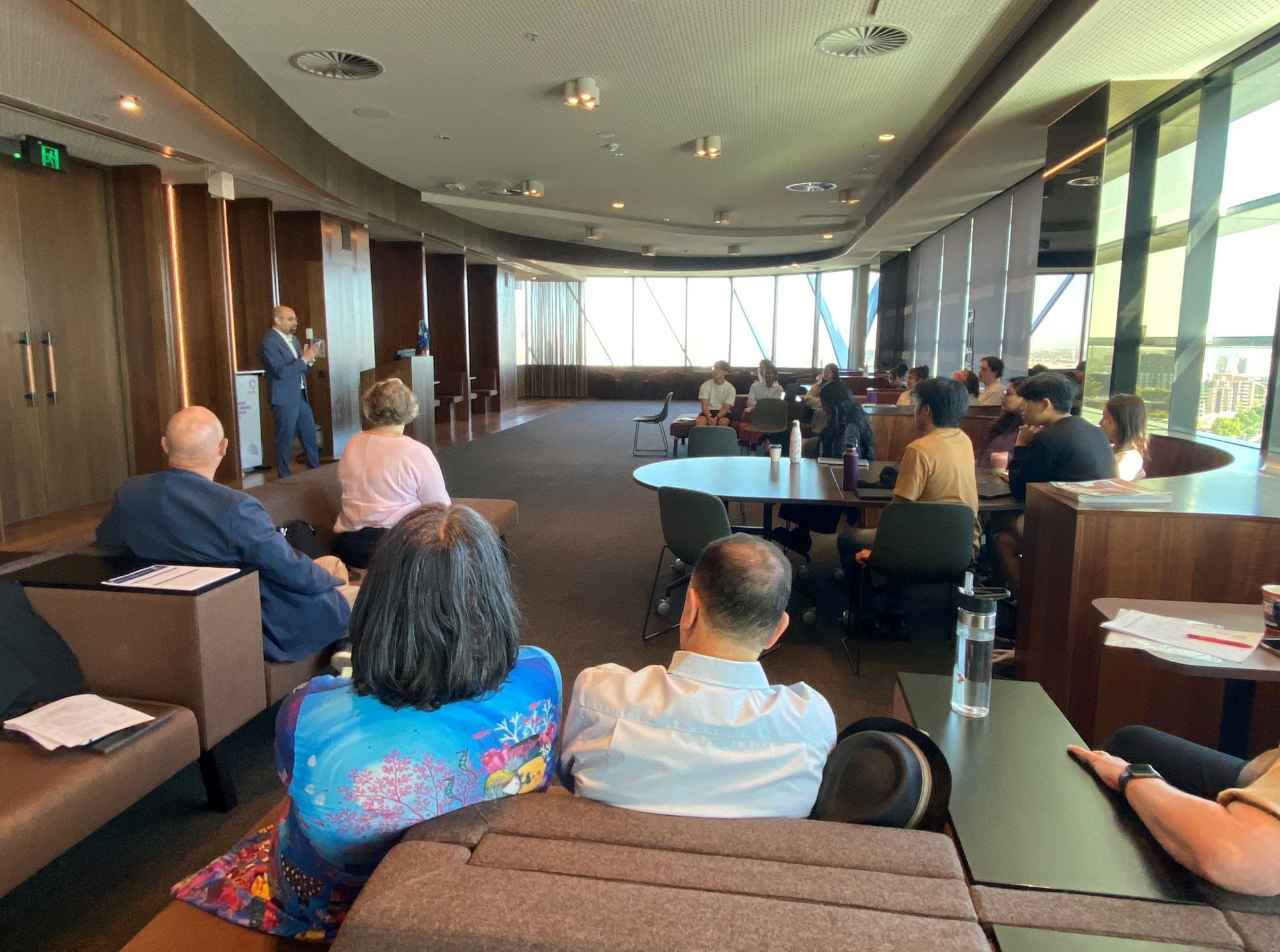
Research topics discussed this year include detecting DNA in the bloodstream to predict patient responses to melanoma therapy and the effects of chemotherapy based on an individual tumour’s genetic make-up.
“Patients often challenge and ask questions that are to the point and this forces students to take a step back and really reflect on the design and significance of their research,” says Professor Hollande.
Giselle Thiele, an Honours student who participated in this year’s workshops, says:
“I think that having that consumer perspective can help us get out of our little pigeonholes — for a lot of us the only exposure we have had to patients is friends or family, and it is a very different situation as you are not thinking about it from a research or scientific perspective, you are thinking about it from a personal perspective.”
Professor Hollande says: “As students prepare to enter the medical research workforce, [these workshops] teach them that it’s vital to listen to the patient voice because they bring useful things to the table. Our graduates know this and that has great long-term benefits for the health workforce.”