Priority 1
Diabetic Kidney Disease
Priority 1 - Diabetic Kidney Disease leadership team:
Professor Richard MacIsaac (endocrinologist)
Professor Alan Cass (nephrologist)
Professor Josephine Forbes (scientist)
Professor Elif Ekinci (endocrinologist)
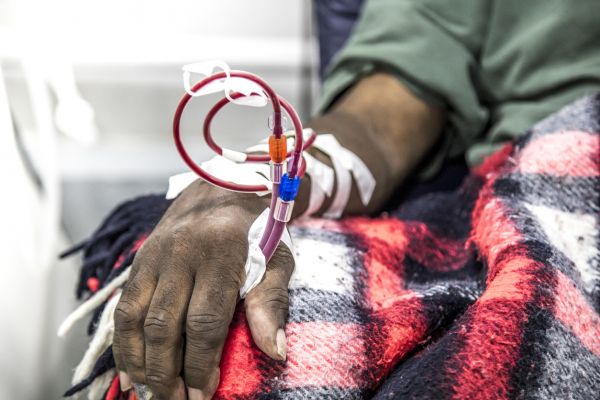
A third of people with diabetes develop diabetic kidney disease (DKD), the leading cause of end-stage kidney disease (ESKD) requiring dialysis or kidney transplant and a major risk factor for cardiovascular disease and premature death.
Current interventions only slow DKD progression and are often ineffective in vulnerable populations, including in Indigenous Australians. National DKD costs are high, with kidney replacement therapy likely increasing year on year due to an aging population and increasing diabetes prevalence in younger age groups.
ACADI will accelerate innovations to improve the lives of people with or at risk of DKD. Explore our current projects below to find out what we're working on across prevention, diagnosis, management and new therapies.
-
| Prevention |
Led by Professor Grant Morahan from the Harry Perkins Institute of Medical Research
Did you know that around a third of individuals with diabetes develop diabetic kidney disease (DKD)? However, we currently lack effective methods to predict who among them will face this complication. This knowledge gap leads to inefficient use of resources, with many high-risk individuals potentially missing out on essential management while resources are spent on those at lower risk of DKD.
Our research aims to change that. We're focusing on refining and expanding a genetic test we've recently developed. This test is designed to pinpoint individuals with Type 1 diabetes (T1D) who are at heightened risk of developing DKD. By doing so, we hope to provide clinicians with a powerful tool to better allocate resources and offer targeted interventions to those who need it most.
Project Title Project 1A: Genetic testing for risk of diabetic kidney disease
Project Lead Professor Grant Morahan (Harry Perkins Institute of Medical Research) Collaborators Bek Brittain (Harry Perkins Institute of Medical Research), Dr Laya Jose (Harry Perkins Institute of Medical Research), Dr Aleena Ali (Austin Health), Professor Elif Ekinci (Austin Health, University of Melbourne), Associate Professor Wendy Davis (Fremantle Hospital, UWA), Professor Tim Davis (Fremantle Hospital, UWA) -
| Diagnosis |
Led by Professor Elif Ekinci from the University of Melbourne
The tools we currently use to measure kidney function weren't designed specifically for people with diabetes. Our research has revealed that these methods often provide inaccurate results. That's where our new tool, RenoTrue, comes in. It's an artificial intelligence model designed to give a more precise estimate of kidney function in individuals with diabetes. By improving the accuracy of diagnosis for diabetes-related kidney disease, we can catch declines in kidney function earlier. This early detection means we can intervene sooner to prevent further kidney damage. It provides new hope for those living with diabetes-related kidney issues.
Project Title Project 1B: ID-DKD International Consortium and RenoTrue – Better diagnosis of DKD risk and progression eGFR
Project Lead Professor Elif Ekinci (University of Melbourne) Collaborators Rodney Kwok (University of Melbourne), Kartik Kishore (University of Melbourne), Digsu Koye (University of Melbourne), Tina Zafari (Austin Health) -
| Management |
Led by Associate Professor Jo-Anne Manski-Nankervis from the University of Melbourne
Clinical trials play a crucial role in testing new treatments for individuals with type 2 diabetes and chronic kidney disease. However, accessing these trials can be challenging for people who primarily receive care in general practice settings. Torch Recruit software is designed to bridge this gap by identifying potentially eligible people within general practices.
Our project has two main objectives:
- Increase the number of general practices using Torch Recruit software.
- Enhance the software's functionality based on feedback from researchers and users to make it more user-friendly.
By achieving these goals, we aim to improve the efficiency of clinical trials and expand access to innovative treatments for individuals with type 2 diabetes and chronic kidney disease who are receiving care in general practice settings.
Project Title Project 1C: Increasing efficiency of clinical trials by optimising Torch Recruit software used to aid patient recruitment
Project Lead A/Professor Jo-Anne Manski-Nankervis (University of Melbourne) Collaborators Laura van Rooyen (University of Melbourne), Dr Tim Monaghan (University of Melbourne), Stephen Dolan (Torch Recruit), Sean Lo (Torch Recruit), Western Health -
| New Therapies |
Led by Professor David O’Neal from the University of Melbourne
This research project focuses on using a new technology called the Medtronic MiniMed 780G insulin pump system to help people with type 1 and type 2 diabetes who also have advanced kidney disease. These individuals may be undergoing dialysis treatment.
The study compares how well this new system works compared to their usual diabetes care routines. The MiniMed 780G system is a type of hybrid closed-loop system that combines an insulin pump with continuous glucose monitoring. By automating insulin delivery and closely monitoring blood sugar levels, we aim to reduce the mental, emotional, and physical challenges that people with diabetes and chronic kidney disease face in managing their conditions compared to their usual care methods.
Project Title Project 1D: Glucose control with next generation hybrid closed loop systems in adults with diabetes and advanced renal disease.
Project Lead Professor David O’Neal (University of Melbourne) Collaborators St Vincent's Hospital Melbourne, Diabetes Technology Research Group, Austin Health, Melbourne Health, Southern Adelaide Local Health Network, Baker Heart and Diabetes Institute, Medtronic Diabetes -
| New Therapies |
Led by Professor Josephine Forbes from the University of Queensland
People with diabetes are much more likely to develop chronic kidney disease. Significantly, this puts them at a 20-fold higher risk of heart disease and early death compared to those without diabetes. Younger individuals under 50 years old who develop diabetes earlier in life and then go on to develop kidney disease, comprise 40% of deaths globally.
In diabetes complications, including kidney problems, the cellular powerhouses known as mitochondria don't function properly. In this research project, conducted in collaboration with a biotechnology company, we're investigating a medication called MitoA. This drug targets these malfunctioning powerhouses in the cells, with the aim of improving outcomes for people with diabetic kidney disease.
Project Title Project 1F: Targeting energy deficiency in diabetic kidney disease using MitoAProject Lead Professor Josephine Forbes (University of Queensland) Collaborators Professor Carol Pollock (University of Sydney), Associate Professor Xin-Ming Chen (University of Sydney)