Rural Victorians have higher PSA levels and greater disease severity at diagnosis, linked data study finds
New primary care data shows abnormal PSA tests often precede diagnosis by months; targeted action in general practice could reduce rural–metropolitan disparities.
 Rural Victorians diagnosed with prostate cancer have higher prostate specific antigen (PSA) levels at diagnosis than metropolitan patients and experience slightly longer wait periods to receive a diagnosis, a new study from the VCCC Alliance Data Connect program has found.
The study, published in late 2025, analysed 2,470 men diagnosed in Victoria between 2010 and 2022 using linked primary care and cancer registry data. Of the 2,470 participants, 52 per cent lived in rural areas and the other 48 per cent in metropolitan localities.
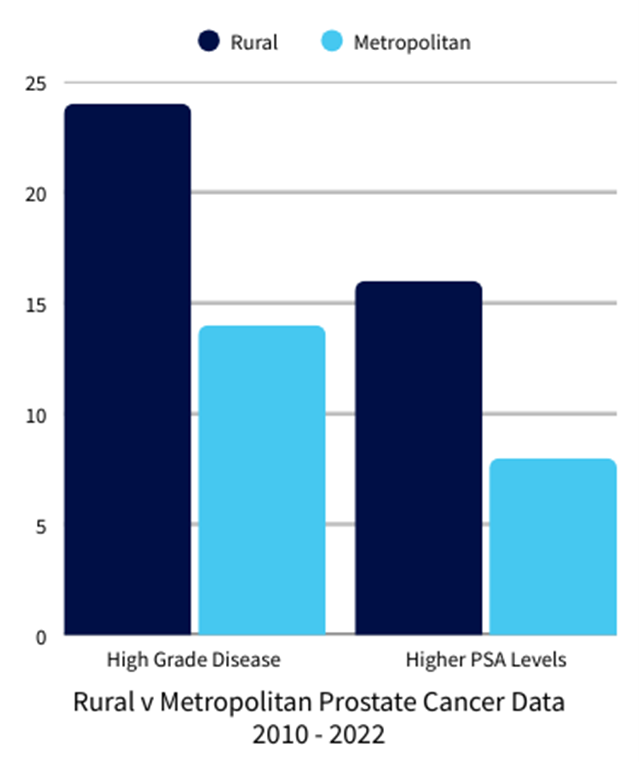
Findings showed that rural patients were more likely to have high grade disease (24 per cent compared to 14 per cent) and were almost twice as likely to have higher PSA levels at diagnosis (16 per cent rural vs eight per cent metropolitan). These higher levels of PSA at diagnosis were associated with poorer five-year survival rates.
Rural patients were also more likely to experience a delay from receiving their first abnormal PSA result to a cancer diagnosis, averaging eight months compared to seven months in metropolitan patients.
Why this matters?
The data suggest that abnormal PSA results are frequently detectable many months before diagnosis, even in patients with significantly elevated PSA levels.
“Our findings show there is substantial variation in tumour characteristics and PSA levels pre-diagnosis between rural and metropolitan areas that could contribute to disparities in prostate cancer survival,” Lead Author Dr Meena Rafiq said.
“This highlights a clear opportunity in primary care to close gaps in prostate cancer diagnosis,” she said. “Targeted interventions to identify and act on abnormal PSA results, especially in rural settings, could help detect cancers earlier and improve outcomes for rural Victorians.”
About the data
The Centre for Victorian Data Linkage (CVDL) linked the VCR data to the National Death Index dataset, and the Patron (Primary Care Audit, Teaching and Research Open Network) primary care dataset. This linkage is made possible by the VCCC Alliance Data Connect program. The Patron Program of Research is managed by the Department of General Practice and Primary Care at The University of Melbourne. It contains de-identified data from a total of 4,657,386 patient records* from 177 participating Victorian general practices. Data from the 2016 Australian Bureau of Statistics (ABS) Census was used to compare the study cohort with the broader Victorian population.
* This figure includes active, inactive and deceased patients and is taken from the Sept 2025 Snapshot.