By Justine Costigan
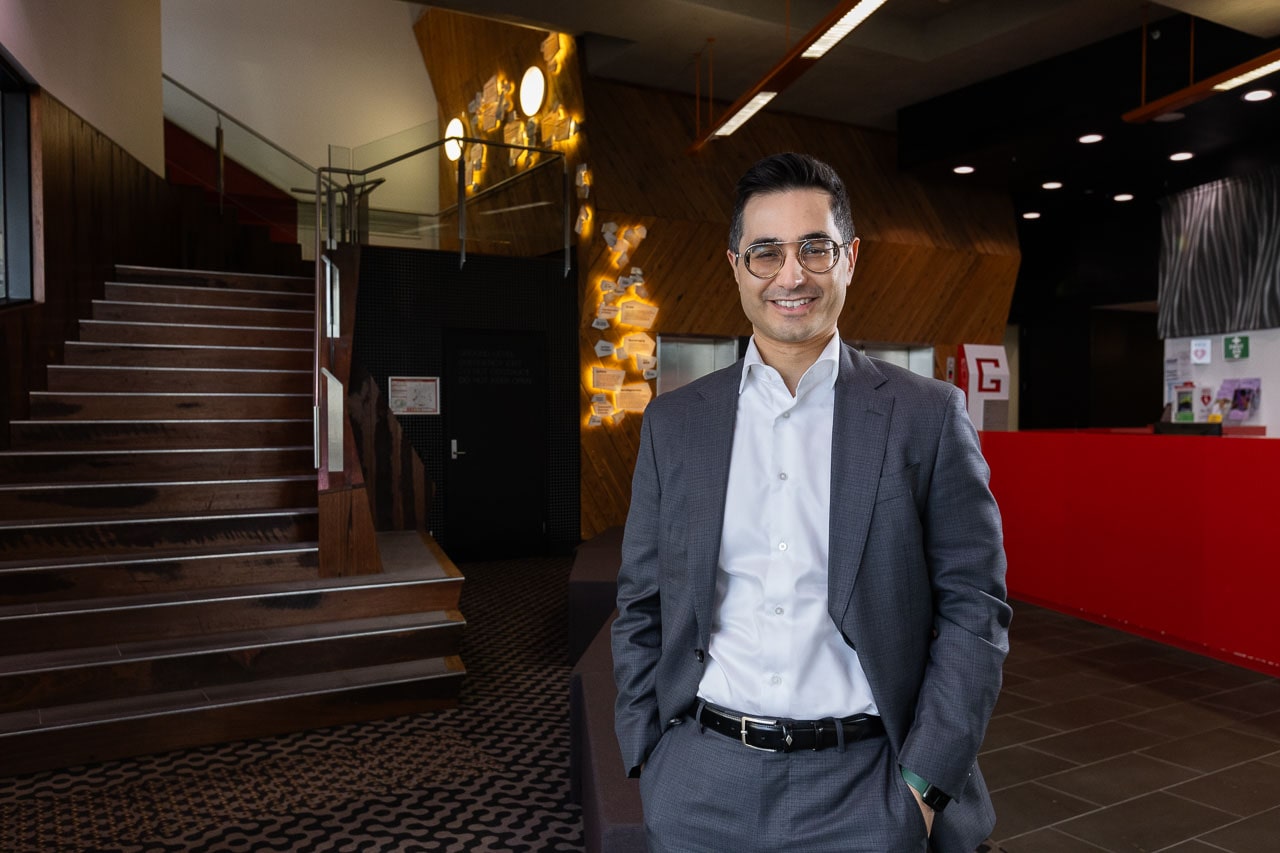
While treatment options have improved, seizure outcomes for people living with epilepsy have remained the same for close to a century. The new President of the Epilepsy Society of Australia is determined to change that.
Ask Professor Piero Perucca (PhD 2017) why he is fascinated by neurology and the conversation quickly moves from the medical to the existential.
“The brain is so incredibly complex,” he says, leaning forward to elaborate.
[Not only is it] involved in the control of different organs and systems, it's at the very core of why we exist, how we are as human beings, and the concept of consciousness. Professor Piero Perucca
Professor Perucca is in his office at the Melbourne Brain Centre, just next door to the Austin Hospital in Melbourne’s northeast where he has been the head of the epilepsy program since 2021. On one side of the glass partition is the research hub, where some of Australia’s best minds are devoted to improving the treatment and understanding of epilepsy.
Through the large window is a view of the hospital where Professor Perucca treats patients with some of the most difficult presentations of the disease. The two buildings are the heart of his dual passions: research and patient care, which are both directed toward improving outcomes for people living with epilepsy.
-
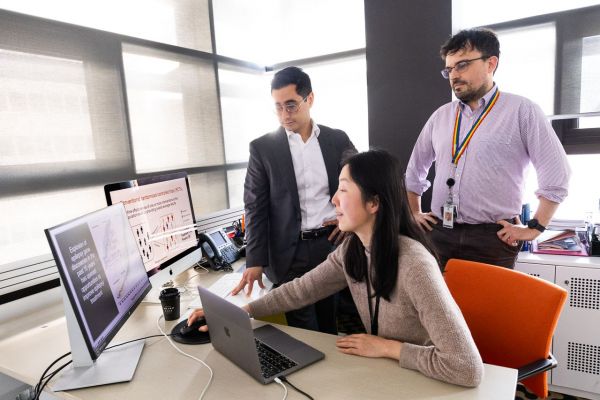
Professor Piero Perucca with research team members Shuyu Wang and Michael Ginevra, in his office at the Austin Brain Centre. Credit: Peter Casamento. -
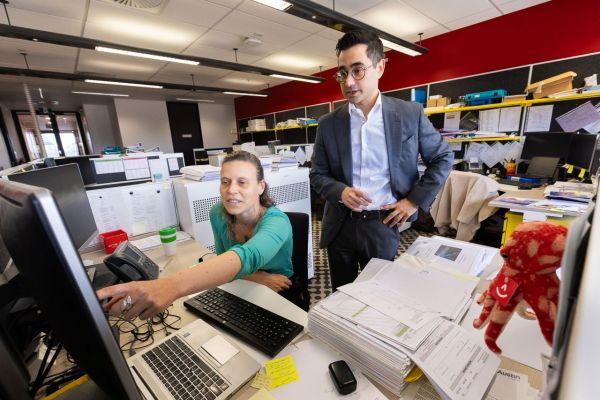
Professor Piero Perucca with epilepsy Research Nurse Heather Robinson at the Austin Brain Centre. Credit: Peter Casamento. -
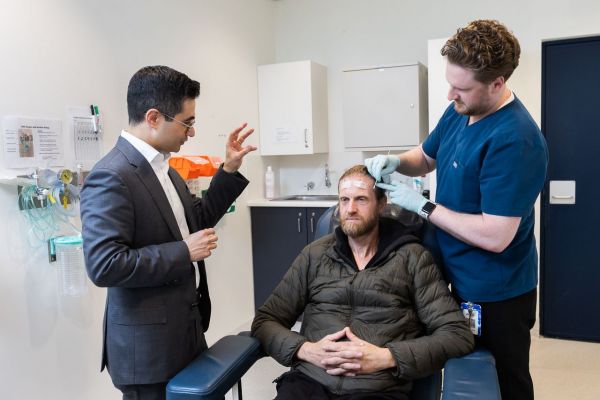
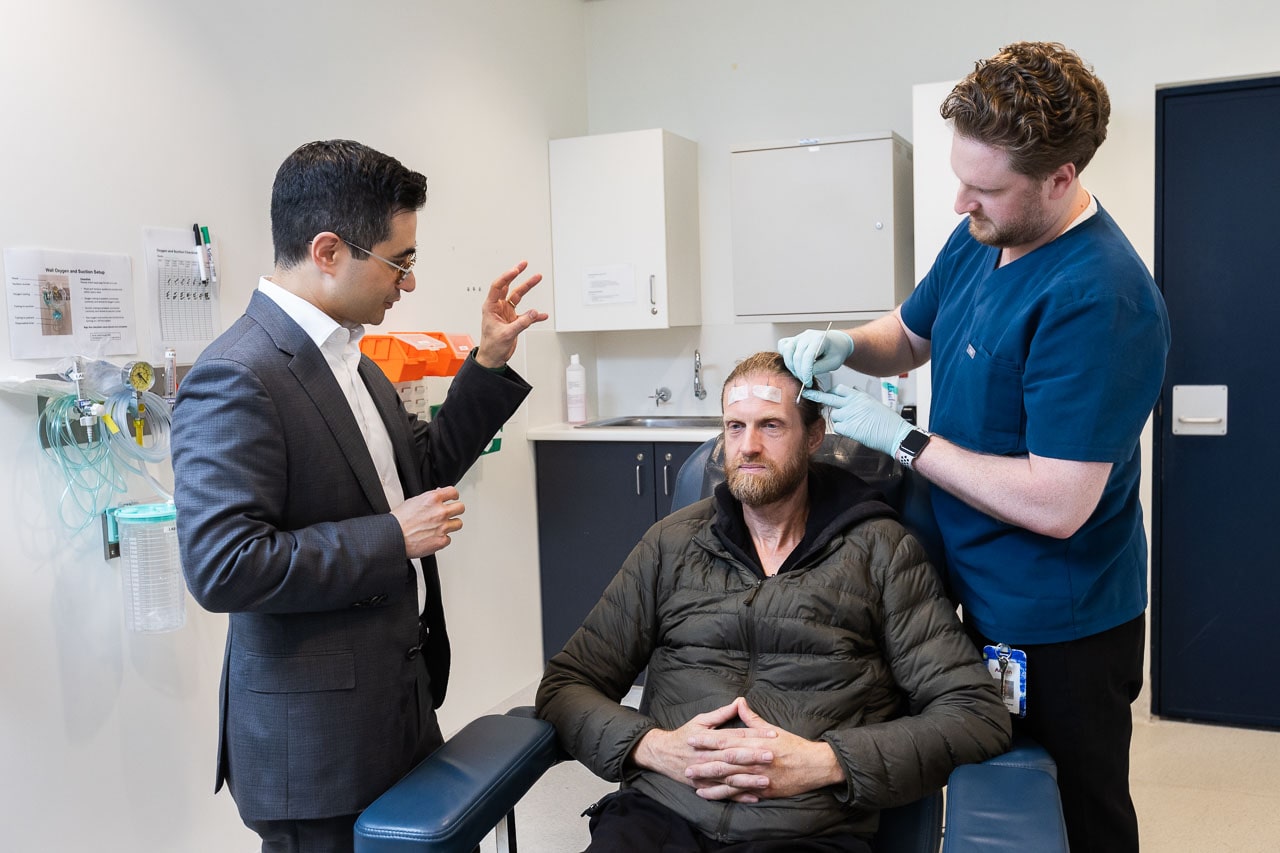
L-R Professor Piero Perucca and EEG scientists Kaelasha Tyler and Chris Farrell demonstrate how to perform an EEG. Kaelasha is being fitted with circuits to measure electrical activity from the brain. Credit: Peter Casamento -
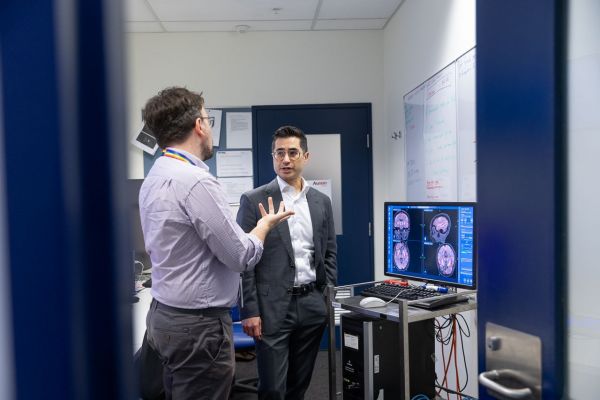
Professor Perucca discusses brain scans with colleague Michael Ginevra. Credit: Peter Casamento




A complex disease, a stubborn problem
Epilepsy is a profoundly complex condition. There are many different types and different causes, with genetics increasingly recognised as playing an important role among cases without an obvious cause and – perhaps surprisingly – among those initially thought to be due to an acquired cause.
The disease affects about 0.6 per cent of the population. That’s 160,000 Australians living with the disease, based on ABS population estimates for 2025. Globally, the World Health Organization estimates around 50 million people have epilepsy, making it one of the world’s most common neurological disorders.
Although every case is different, people living with epilepsy often must make significant changes to their life. The disorder may prevent them from obtaining a driver’s licence or participating in some sports, or require extra precautions or management when planning activities that other people take for granted. For many people, pregnancy and family planning are much more complex.
We have more medications and different side effects profiles…but in effect, the chances of controlling seizures are pretty much the same today as they were before. Professor Piero Perucca
The statistics may be depressing for some, but not for the Professor. He views them as a challenge.
“[It’s] an incredible stimulus for us to do things better,” he says.
In his role at the Austin as Professor of Adult Epilepsy in the Department of Medicine, at the University of Melbourne – where he’s supported by the National Health and Medical Research Council (NHMRC) Emerging Leadership Investigator Grant – and as the new President of the Epilepsy Society of Australia, he’s determined to meet that challenge.
“We're at a cusp of a major change in the way we think about the treatment of epilepsy,” he says.

Tackling the epilepsy iceberg
Professor Perucca believes breakthroughs in understanding the mechanisms of epilepsy through genetics could lead to new treatments to reverse the consequences of gene defects. He’s also encouraged by a better understanding of epilepsy’s co-morbidities, such as mental health and cognitive issues, and how they relate to – and potentially influence – symptoms of the disease.
“Studies show that a history of depression, anxiety or psychosis can predate [epilepsy]. So, it's not a simple reactive process, it's a biological relationship…Epilepsy is a bit like an iceberg. What you see are the seizures, but under the water are those issues,” he explains.
We are in a very good position to be able to work collaboratively and as a community. Professor Piero Perucca
Future breakthroughs will likely come from collaboration and “combining information from different sources and changing our approach to discovering new treatments…it’s not a one –size-fits-all approach,” he says.
While researchers all over the world are working towards better outcomes, Professor Perucca believes Australia has the potential to make an outsized contribution.
“We are in a very good position to be able to work collaboratively and as a community. Everyone here understands that if we work together, we can compete with the big research groups in the US or in Europe,” he says.
Three heads are better than two
Collaboration will be essential if Australia is to successfully tackle the gaps outlined in the 2019 global report on epilepsy produced by the World Health Organization. A signatory to the Intersectoral global action plan on epilepsy and other neurological disorders, Australia has committed to meeting its 2031 goal. It’s an ambitious agenda.
“It means putting together a plan and advocating with the government for better funding, for better care pathways, improvement in healthcare workforce…research opportunities, research funding, research infrastructure. It's a critical time, and an important one,” states Professor Perucca.
The work has already begun, and he is quick to acknowledge the contribution of his predecessors and fellow experts. He knows the power of bringing people with various perspectives and expertise together.
Professor Perucca still remembers the words of his grandfather – a humble Italian whom he describes as very wise.
“Remember, he used to say, two heads are better than one and three are better than two.”
Turn clinical challenges into research breakthroughs. Apply for the David Bickart Clinical Research Fellowship.