By Florienne Loder
It’s 4.00pm in Melbourne and I’m on a Zoom call with Professor Tina Brock. She’s adjusting to the time zone in Copenhagen, Denmark where she is attending FIP2025 – the International Pharmacy Federation conference. She apologises for her croaky ‘conference voice’, from intense networking conversations.
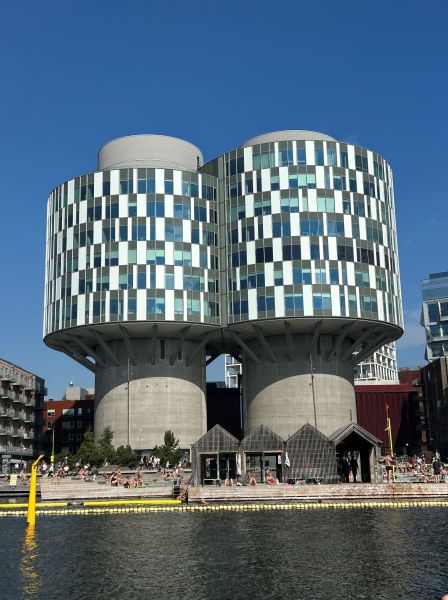
“The day I got here was a Sunday, so I just took a big walking tour to keep myself going,” Professor Brock says. “And they had converted and connected these two former cement silos – they’re like, ‘okay, we can tear them down, but why don't we, you know, connect them? And use that connection as the feature?’”
The eloquent symbol made Professor Brock, Director of the Collaborative Practice Centre at the University of Melbourne, pause.
I often talk about ‘tearing down’ or ‘burning down’ the silos. The problem with that is, it scares people into thinking they're losing something: ‘I'm losing my silo’, you know? Maybe the way the Danes have done this is actually a better way of bringing people into that journey [by] saying, ‘let's connect our silos’. Professor Tina Brock
Collaboration a strong theme in health education globally
Before Copenhagen, Professor Brock was in Barcelona for the International Association for Health Professions Education (AMEE) conference. “That was the first meeting where I had heard the word ‘interprofessional’ used as a noun,” reflects Professor Brock.
“Yeah, I'm a professional. But I am also an interprofessional. I'm not just the best doctor; I'm not just the best dentist. My contributions are complementary to others and that collective is ‘an interprofessional’. I thought that was cool,” says Professor Brock.
Having recently attended several global health education sector conferences, Professor Brock says she has repeatedly encountered the theme of collaboration.
“If I had to draw a bubble diagram, it would be a giant ‘word cloud’ with ‘collaboration, partnership, teamwork’ coming out strong, which tells me we're going in the right direction,” she says.
Yeah, I'm a professional. But I am also an interprofessional. I'm not just the best doctor; I'm not just the best dentist. My contributions are complementary to others and that collective is ‘an interprofessional’. I thought that was cool. Professor Tina Brock
“What has been challenging, I think, is while that's pretty compelling evidence, that that is what we need to do, there is little detail about how to do it because it requires cultural change.”
Professor Brock was excited that people are interested in the work that the Collaborative Practice Centre at the University of Melbourne is doing.
She’s on a quest to teach medicine, dentistry and health sciences students across the faculty the skills to effectively work together in teams.
Her diverse team at the Collaborative Practice Centre has developed the ‘Ways’ curriculum to do just that and they are embedding and integrating it into all the school programs across the Faculty of Medicine, Dentistry and Health Sciences.
“What many programs worldwide do is carve out the interprofessional as a separate subject. Whereas what we're trying to do is to integrate interprofessional education into the courses themselves. The route that we have chosen is the harder, but potentially, better one. Because if you integrate the courses, then that is best practice.”
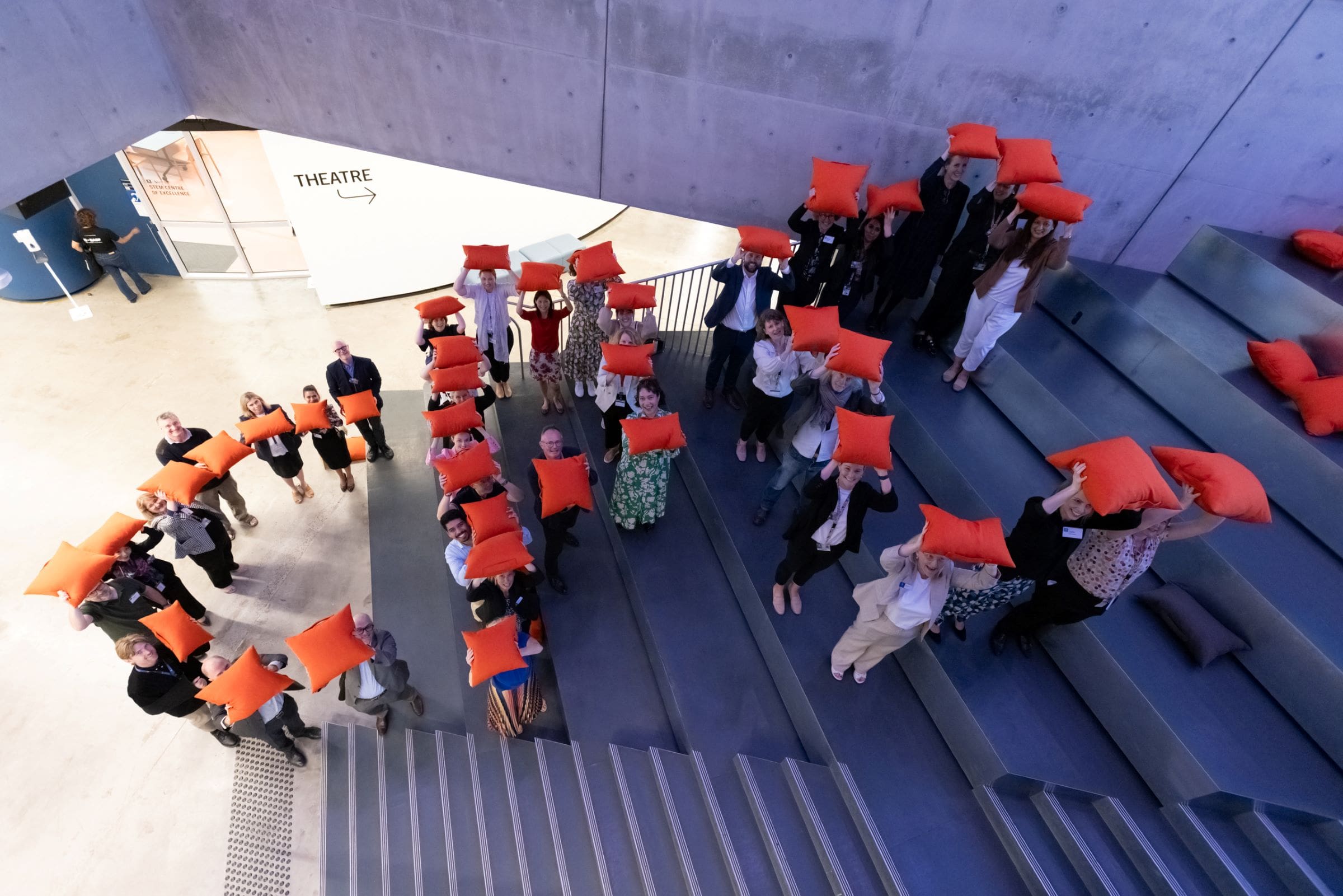
Teaching teamwork: From primers to workshops and experiential learning at INTERPRACT@St Vincent’s Hospital Melbourne
At the beginning of the academic year, the Collaborative Practice Centre launched its short modules, known as ‘primers’, that are included across the school programs. Now students will be brought together across disciplines to participate in face-to-face interactive workshops.
“The gold is in experiential learning,” says Professor Brock. “All those primers and workshops prepare students for what they're going to do in workplaces.”
Harnessing the power of microwaves and micro-interventions
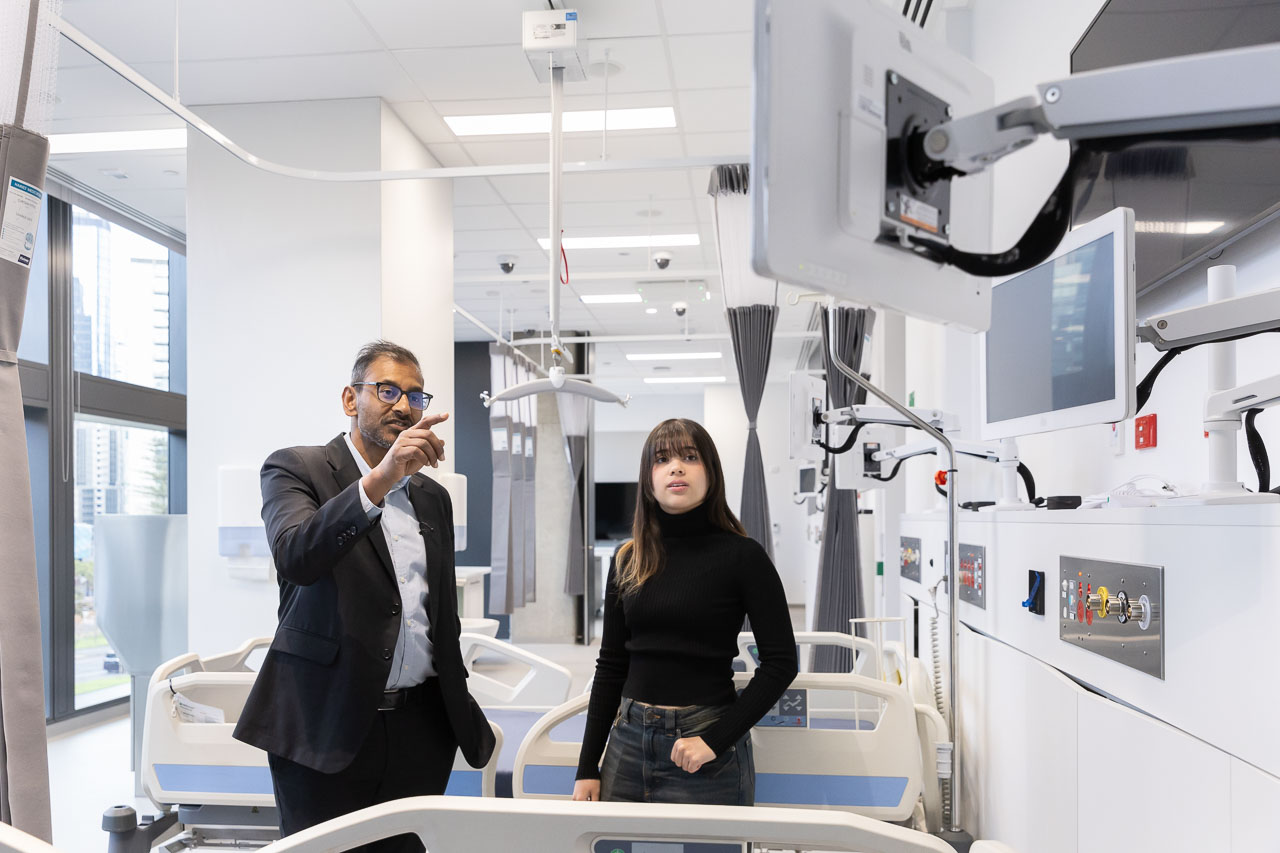
The new clinical school at the ACMD has been designed with collaboration in mind through the building’s architecture, which includes flexible and malleable teaching spaces.
“We’re not tearing down silos – we’re linking them together,” explains Professor Brock.
Operational levers such as joint onboarding and opportunistic timetabling to encourage interactions between students across disciplines, as well as collective storage and shared social spaces that will be sign-posted to invite all students in, are also being used.
“Everybody needs a place to take a little break, eat their lunch, or check something on the internet. Our students need a place to heat food. So, lockers and the student tea rooms will be signposted to include everyone. These might sound like micro-interventions, but they are so powerful,” explains Professor Brock.
Healthcare needs teams, not superheroes. Professor Tina Brock
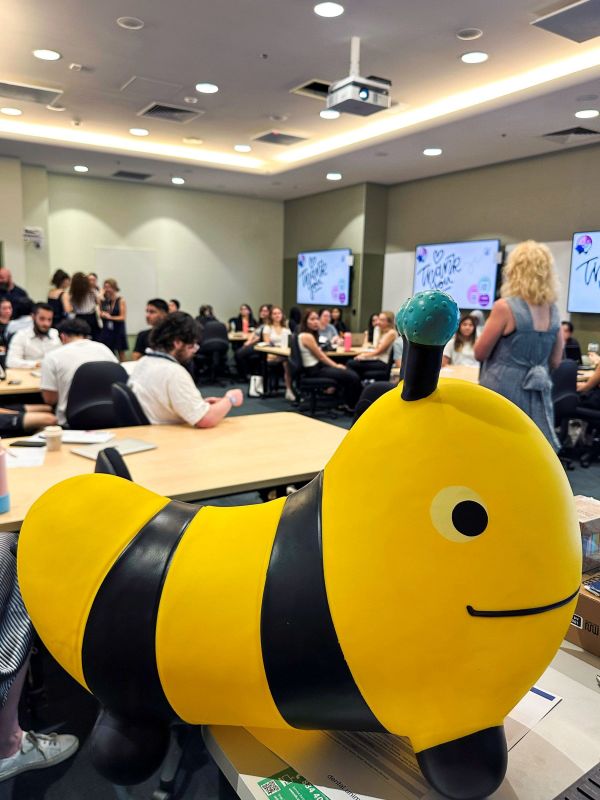
“If we're advancing health, some of the people that study with us will stay in Melbourne, some will go further afield, some will go into the rural and regional areas,” says Professor Brock. “And so, we hope to have nurtured ‘pollinators’ who share this cultural movement of collaborative practice in healthcare – locally, nationally and globally.”
“When I grew up, there was Superman, there was Batman, there was Spider-Man – these individual superheroes all had their special powers. But this generation has grown up in the Marvel universe. They're used to the Avengers, the X-Men, you know, these collaborations of superheroes, right? So, they're like, oh yeah, why would you just have Superman?”
Learn about the Aikenhead Centre for Medical Discovery