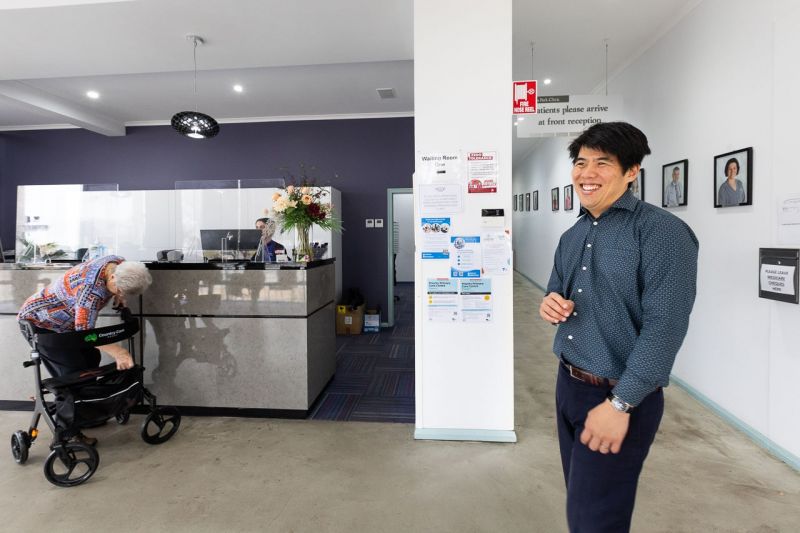
By Justine Costigan
It sounds simple, but a new research project aiming to make sure every asthma sufferer has an up-to-date care plan might be an effective way to save lives – especially those of young people.
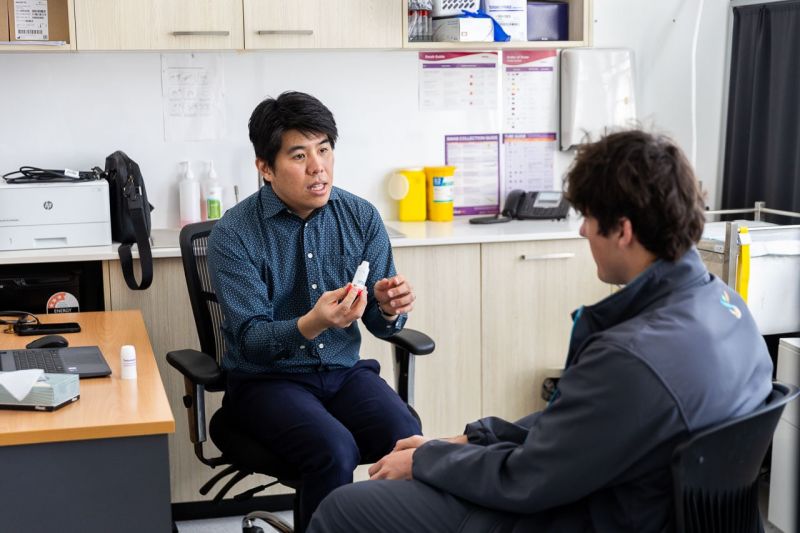
Hospital emergency rooms can be sobering places. Even people who are trained to work in them often find the tragic outcomes stay with them far longer than their successes. When Dr Jimmy Tseng (BMedSc 2008, MBBS 2011, PostGDipSurgAnat 2012, GCertUniTeach 2024) was training in emergency paediatrics at the Royal Children’s Hospital in Melbourne, witnessing the deaths of children from asthma had a profound impact.
Dr Tseng knows what an asthma attack feels like. Both he and his brother suffered from asthma as children, sometimes needing hospitalisation. Improving their care was one of the reasons his parents decided to emigrate from his birthplace in Taiwan to Brisbane.
The danger of outdated treatment
According to the 2002-2003 World Health Survey, the world’s highest rate of doctor diagnosed and treated asthma. Rates of childhood asthma are disproportionately high in regional Australia. Victoria is second only to NSW in the number of child asthma hotspots in the regions.
A lot of people’s asthma isn’t being treated appropriately, and it can be quite dangerous…especially if their asthma is getting worse. Dr Jimmy Tseng
Dr Tseng received the 2025 Dr Leon Carp Award – a grant supporting research leading to improvements in patient care – for testing approaches to improve the use of best practice asthma action plans. “Unfortunately, despite robust research and changes to the guidelines, there is still limited data on their use in practice,” he says.
While the guidelines mandate the use of a combination treatment such as Symbicort after a child turns 12, many children continue to rely solely on a Ventolin puffer long after they should have progressed to the adult medication.
In a worst-case scenario, if someone uses the ventilator by itself too much, they can end up in a position where the ventilator stops working Dr Jimmy Tseng
According to 2022 ABS statistics reported by The Australian Institute of Health and Welfare, 27 per cent of people aged 40 and under self-reported poor asthma control based on their medication use. Around 2.8 million people (11 per cent) in Australia are estimated to be living with asthma, and following the pandemic, deaths from asthma began to increase.
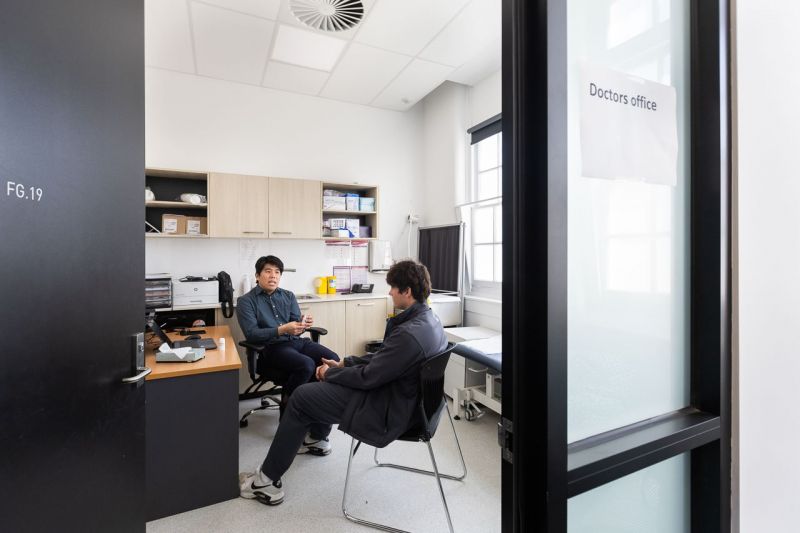
Credit: Peter Casamento

Taking action in regional classrooms
Professor Lena Sanci, Chair of General Practice in the Department of General Practice and Primary Care at the University of Melbourne, is supervising Dr Tseng’s project and is enthusiastic about his research. She believes collaborating with clinicians should be a priority for the university. “That's where the rubber hits the road. Prevention…and keeping people well is really at the general practice patient interface,” she says.
We're very keen on clinician researchers, and it is quite challenging to get them back into research. Professor Lena Sanci
“We're very keen on clinician researchers, and it is quite challenging to get them back into research…you've got to really catch people at the right time of their career when they're passionate about something and they really want to answer the question they've been grappling with.”
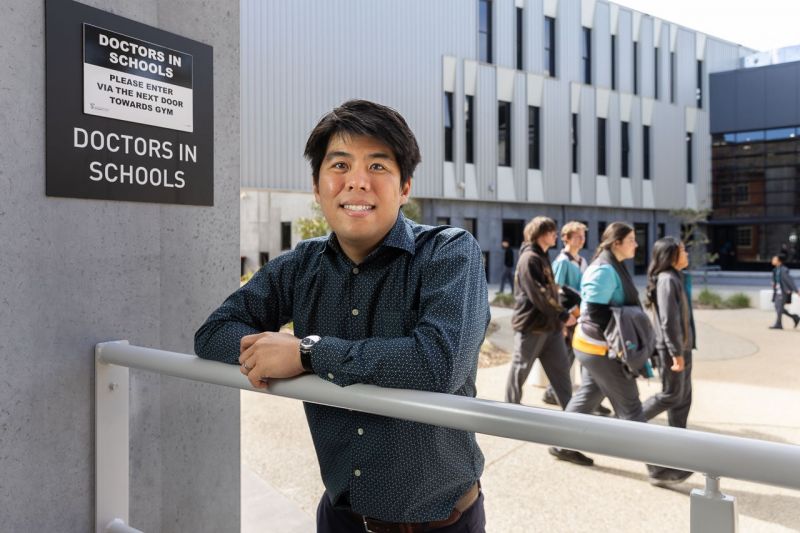
Dr Tseng’s passion for improving care for children living with asthma clearly fits the bill. He is now reviewing asthma action plans at schools to see if they are current and conform to current guidelines. The research project will gather data to analyse whether these interventions have helped increase the numbers of children with up-to-date plans.
Dr Tseng will complete his research in 2026. If the results show his interventions have been successful, he hopes his work can become a template that can be replicated elsewhere.
“I just want people to follow best practice. If my method is actually shown to be helpful, and others can utilise it in their own schools and practices, that would be amazing,” he says.
Are you a GP interested in addressing your community’s health needs through research? Apply for the Dr Leon Carp Award.