By Bianca Nogrady
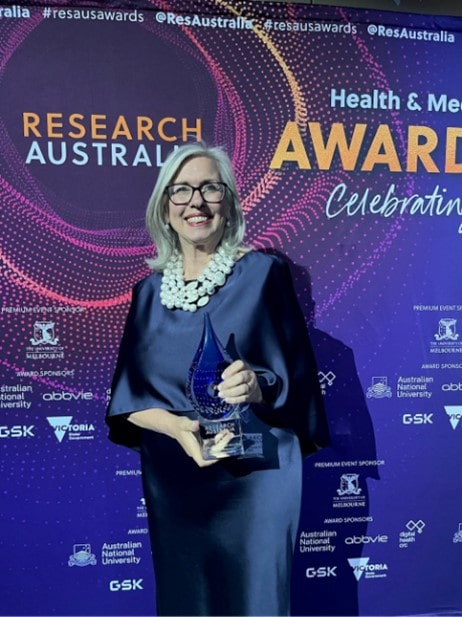
Professor Christobel Saunders AO received a Health Services Research Award at the 2024 Research Australia Health & Medical Research Awards.
A woman in her late forties facing a double mastectomy for breast cancer decides to postpone the recommended breast reconstructive surgery because, as her family’s sole breadwinner, she needs to return to work quickly.
A man in his seventies with end-stage kidney disease would benefit from multiple haemodialysis sessions every week to filter toxins and waste products from his blood, but he wants fewer sessions so he can still collect his grandkids from school.
At the University of Melbourne, breast cancer specialist and surgeon Professor Christobel Saunders AO is part of a growing global movement called person-centred, value-based healthcare.
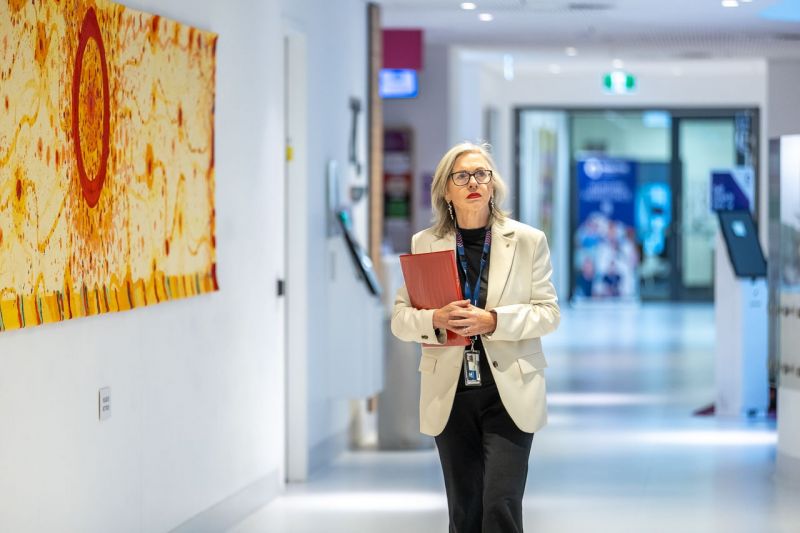
Credit: Peter Casamento
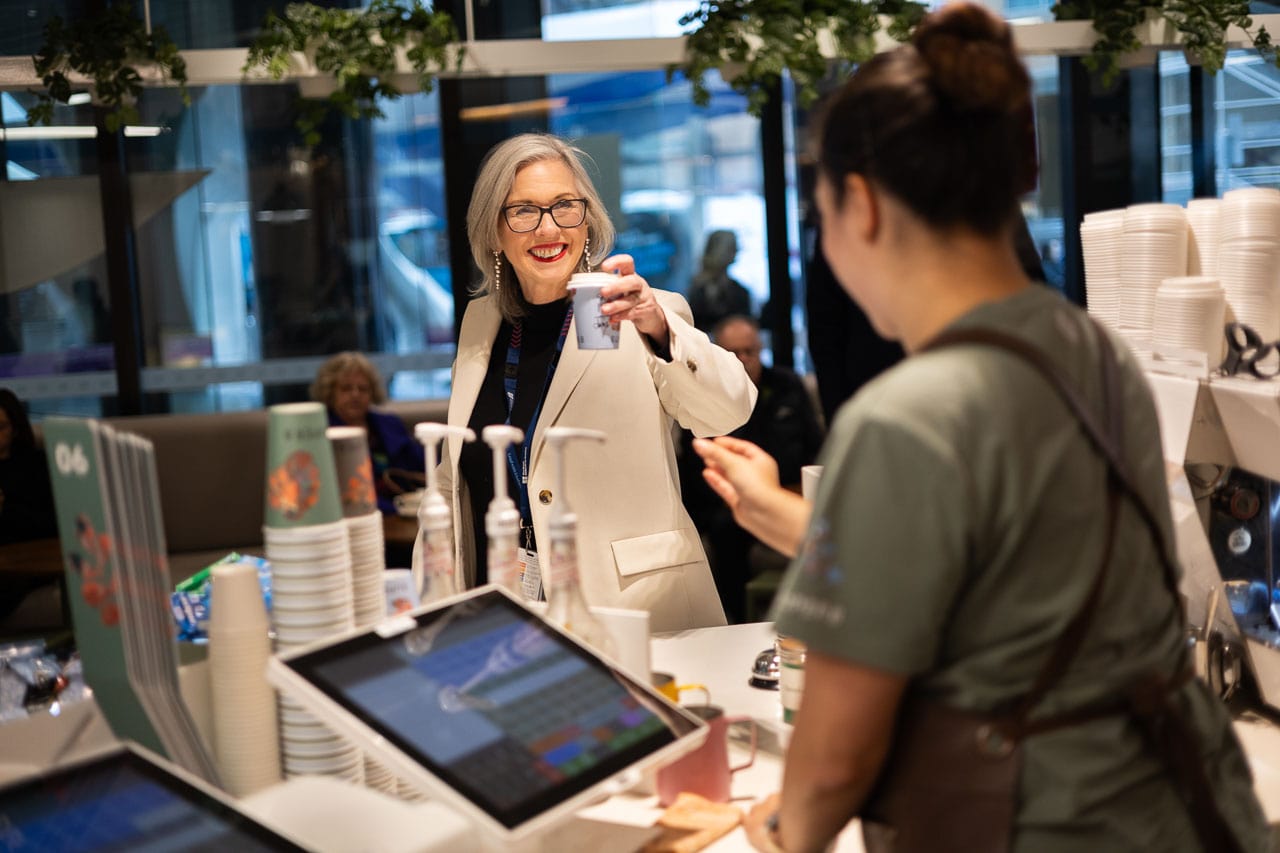
“It really means looking from a patient's perspective at the outcomes that matter to patients, over the cost of delivering those outcomes, and trying to optimise those,” says Professor Saunders, who is also a consultant surgeon at Peter MacCallum Cancer Centre.
Professor Saunders’ journey with the movement began around ten years ago, with the realisation that many of the clinical measures by which success or value are judged are generic across an incredibly diverse patient population.
“The clinical measures might not apply to you and the values that you have, the goals that you have for your care, and the treatment preferences that you have,” she says.

Credit: SeventyFour, iStock
Putting personal values at the heart of healthcare
An international group of clinicians and researchers, including Professor Saunders, began developing alternative measures that could better capture each patient’s hopes and needs, and the concept of person-centred, value-based healthcare was born.
Three core principles govern this new approach:
- First, treatment decisions must reflect a patient’s own values, goals and preferences.
- Second, patients must be actively consulted in shared decision-making.
- Third, their progress must be regularly reviewed against their personal outcomes.
To address this, it is important to utilise PROMs (Patient-Reported Outcome Measures) and PREMs (Patient-Reported Experience Measures). But also, to discuss and record patients’ values, goals and preferences.
“Obviously, doctors have always tried to do that with their conversations and consultations,” Professor Saunders says. “But what we've never been good at is systematically recording that.”
Documenting personal, value-based measures in a stable, standardised way can be challenging. And presenting this documentation in a format that can be used quantitatively is no easy feat.
PROMs can be very generic, which doesn't give you a lot of definition – just ‘how are you feeling today’ sort of thing, or they could be much more specific to a certain disease and the treatments and the side effects that are important to patients. Professor Christobel Saunders AO
Patient experience matters as much as outcomes
PREMs are even more wide-ranging, covering everything from parking costs and hospital food to the challenge of navigating care across multiple healthcare facilities. But PREMs also matter for outcomes.
“Hospitals that do really well on patient-reported experience measures in fact do generally better for other outcomes,” Professor Saunders says.
A 2018 international survey of more than 4000 cancer patients found four themes in what patients wanted: a swift and accurate diagnosis, joined-up multidisciplinary care, shared decision-making, and clear information about the financial costs of their care.
In response, the Global Centre of Excellence for Person-Centred Value-Based Healthcare developed PerEmpo – a platform that supports everyone involved in healthcare to ‘focus on aligning care to people’s individual values, goals and preferences.’
Despite acknowledgement within the industry that a focus on patient values is beneficial, medical practitioners’ notoriously conservative stance on significant changes to practice means that scepticism remains.
“It's much easier to do a blood test or an x-ray to see how the patient's doing, rather than asking them,” Professor Saunders says.
There’s also the challenge of standardising this data so it can be collated and interpreted – not only at the micro level of the individual patient, but also the meso level of a clinical unit such as a cancer clinic, and the macro level of an entire hospital.
But Professor Saunders is optimistic that system transformation is happening, and she and her colleagues are at the coalface of that process. Alongside several research projects around person-centred, value-based healthcare, they have also established a Faculty impact area - an initiative focusing specifically on healthcare transformation.
We're going to try and make the University of Melbourne a real beacon for research around this. Professor Christobel Saunders AO
Listen to an interview with Professor Saunders AO and Professor Sarath Ranganathan about Research at the Melbourne Medical School.
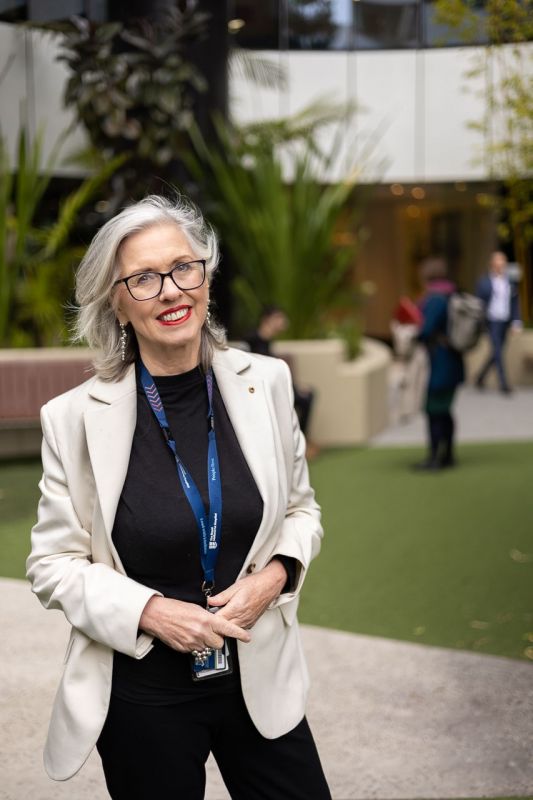
Credit: Peter Casamento