Reflections from the Head of School
Medicine and healthcare are changing rapidly. New technologies are reshaping how we learn, research and deliver care, while many of the health challenges facing our communities increasingly cross traditional disciplinary and institutional boundaries. Recent activities across the School have reinforced how important it is that we continue to look beyond our own areas of expertise, bring different perspectives together and ask: who else needs to be part of the conversation?
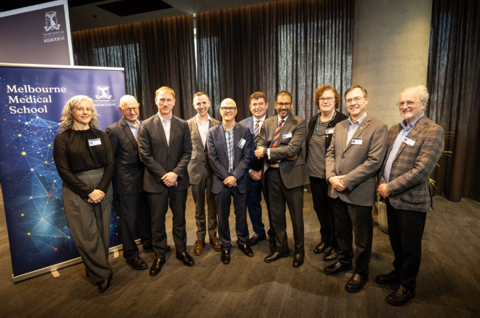
That question was at the heart of our annual Symposium in July, where we brought together colleagues from the Faculty of Medicine, Dentistry and Health Sciences, and the Faculty of Engineering and Information Technology, alongside government, health service leaders, medical research institute partners and our students, to consider how we prepare doctors for a future increasingly shaped by technology, innovation, data science and artificial intelligence.
Our keynote speaker, Dr Mark Cohen, Dean of Carle Illinois College of Medicine, shared his experience of an innovative model of medical education that brings engineering, design thinking and clinical training together. His keynote set the scene for broader discussions about AI and digital health, biomedical engineering, industry partnerships, innovation and leadership, and what these developments mean for the future of medical training. Importantly, the Symposium outcomes also helped us identify practical opportunities to take this work forward as we continue to innovate our MD with purpose - preparing our students not simply to adapt to an increasingly technology-driven world of healthcare, but to help lead it.
While Mark was in Melbourne, we also took the opportunity to sit down for an episode of the MMS Network Podcast and continue the conversation, exploring innovation in medical education, technology-enabled healthcare and the opportunities and responsibilities that come with the adoption of AI.
The importance of looking beyond our own boundaries was equally apparent during my visit to the Department of Rural Health in Shepparton for its Research Forum. Bringing together researchers from the Department’s Wangaratta, Shepparton and Ballarat sites, the Forum showcased work spanning rural health workforce and education, health services, mental health, graduate research, rural needs analysis and Indigenous health. A strong common thread was the importance of place-based research – working with rural health services, communities and partners to generate evidence that responds to local priorities and translates into practical improvements. I was particularly impressed by the depth of local knowledge embedded into research efforts across the Department, and the opportunities to strengthen connections and explore future collaborations.
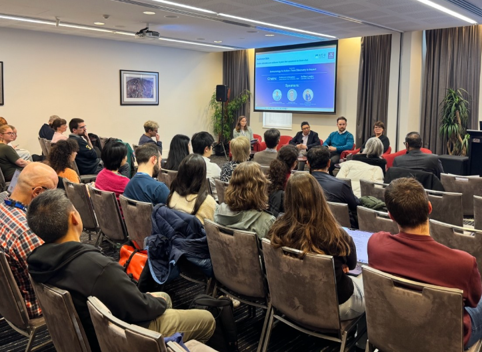
Similar themes of connection and translation emerged at our third MMS + WEHI Partnering for Impact event, ‘From Immune Discovery to Global Health Outcomes’. Building on previous forums focused on Women’s Health and AI in Discovery Science, the event brought researchers from both organisations together to explore advances in immunology and the design and delivery of clinical trials. It was encouraging to see new connections being made and the enthusiasm for where future collaborations between MMS and WEHI might lead.
The relationship between research, education and clinical practice was also evident at Advances in Internal Medicine, which I was pleased to open in August. Bringing together clinicians and educators across a broad range of specialties, the conference provided an opportunity to share emerging evidence and consider its application to clinical care. As medicine continues to evolve, these exchanges remain an important part of ensuring advances in research and evidence inform how we teach, learn and care for our patients. The symposium, hosted by the Department of Medicine, convinces me that in our medical school and partner health services, we have some of the best clinician researchers on the planet.
Amid these conversations about the future, it is equally important to recognise those whose longstanding contributions have helped shape our School and University. This year, more than 80 of our staff were recognised for reaching significant service milestones, celebrating between 10 and more than 30 years with the University. It is wonderful to see so many colleagues reach these milestones, and I want to personally congratulate and thank each of them for the commitment, expertise and many years they have contributed to our School and University.
There is also much to look forward to in the coming months. On 19 October, the Hon Julia Gillard AC will deliver the 2026 Climate CATCH Lab Annual Oration, reflecting on leadership, climate change and the role of institutions in shaping equitable and evidence-informed futures. These are important conversations for universities and health institutions alike, particularly as we consider the increasingly complex relationship between climate, health and equity.
Later that month, the 11th Ngar-wu Wanyarra Aboriginal and Torres Strait Islander Health Conference will bring our community together on Yorta Yorta Country. Meaning ‘listen and act’ in Yorta Yorta language, the conference will centre First Nations voices and knowledge, support truth-telling and celebrate the strengths and successes of Aboriginal and Torres Strait Islander peoples. I look forward to listening, learning and participating in this important gathering.
Taken together, these activities reflect not only the breadth of what is happening across our School, but something they share: progress and innovation rarely happens in isolation. Whether we are reimagining medical education, strengthening rural health, translating discovery into clinical impact or responding to the needs of our communities, our ability to listen to different perspectives, share expertise and build meaningful partnerships will contribute to solving problems that will benefit medical care and health.
Best regards,
Professor Sarath Ranganathan
Head of the Melbourne Medical School