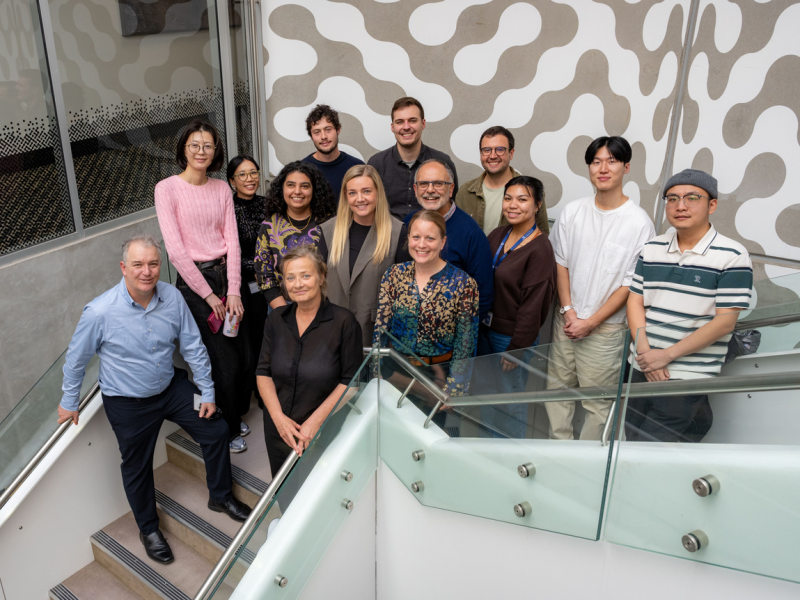
Danish Researchers Visit the Melbourne Brain Centre Imaging Unit to Foster International Collaboration
The Melbourne Brain Centre Imaging Unit (MBCIU) was honoured to host three leading researchers from the Center for Neuropsychiatric Schizophrenia Research, Mental Health Center Glostrup, Denmark.
The Melbourne Brain Centre Imaging Unit (MBCIU) was honoured to host three leading researchers from the Center for Neuropsychiatric Schizophrenia Research, Mental Health Center Glostrup, Denmark. Their visit marks an exciting step toward strengthening international collaborations in psychiatric neuroimaging and data science.
During their visit, the Danish team shared their innovative research on psychosis and neurodevelopment, offering fresh insights and paving the way for joint initiatives.
- Dr Karen Ambrosen, a biomedical engineer and senior researcher, presented her work on “Data-Driven Modeling of First-Episode Psychosis Using Multiple Modalities.” Her research applies machine learning techniques to multimodal neuroimaging data—such as MRI and EEG—to identify biomarkers and clinically relevant subgroups in schizophrenia.
- Dr Cecilie K. Lemvigh, a psychologist and senior researcher, shared findings from a large Danish twin study in her talk on “Heritability of Neuroimaging Phenotypes in Schizophrenia.” Her work explores how genetic and environmental factors contribute to neurodevelopmental abnormalities, with a focus on cognition, white matter microstructure, and early life adversity.
- Tina Dam Kristensen, a clinical psychologist and senior researcher, discussed her transdiagnostic research spanning early psychosis, childhood neurodevelopment, and large-scale imaging. Currently collaborating with MBCIU's Dr Warda Syeda on the Affinity Scores project, Tina is investigating shared clinical and neurobiological dimensions across psychosis-spectrum disorders. She also introduced her work from the COPSYCH project, which maps brain connectivity in over 600 children from the COPSAC2010 cohort, integrating MRI, cognitive assessments, and prenatal nutritional interventions.
The presentations sparked dynamic discussions around data harmonization, methodological approaches, and future research synergies. The visit also helped solidify a collaborative framework for ongoing projects, student exchanges, and cross-site data integration.
We extend our heartfelt thanks to Karen, Cecilie, and Tina for their visit, their generosity in sharing knowledge, and their enthusiasm for building global research partnerships. We look forward to continued collaboration and exciting research.