As told to Justine Costigan
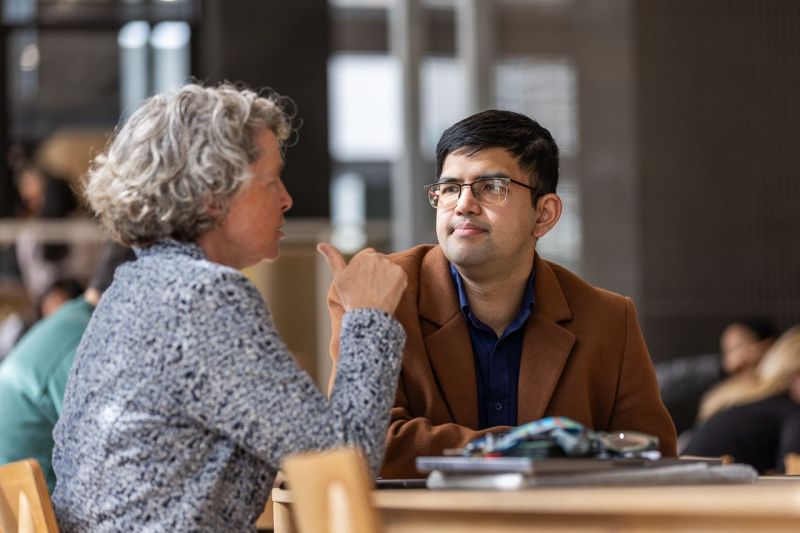
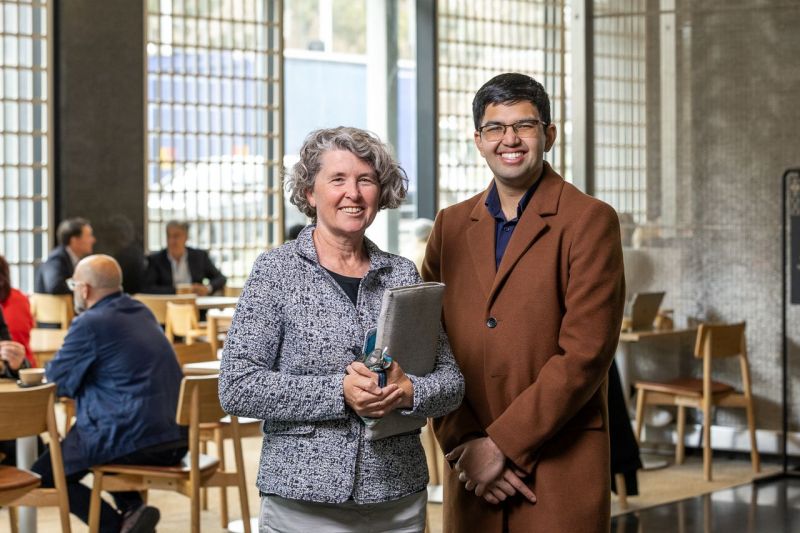
Biomedicine student Farhan Islam wanted to be an engineer, not a doctor. But then he met Associate Professor Lisa Cheshire through the University’s mentoring program and realised he could be both – an inventor who helps make people’s lives better.
Lisa Cheshire
Associate Professor Lisa Cheshire (MBBS 1992) is the Academic Director, Clinical Education Strategy and Risk (CESAR) in the Faculty of Medicine, Dentistry and Health Sciences. A University of Melbourne alum, she was a regional general practitioner by training and worked in regional Victoria as a GP for more than 20 years.
Associate Professor Cheshire has been part of the University of Melbourne’s mentor program since 2019. She mentors students in the undergraduate biomedicine degree, which can lead to a wide range of careers across health sciences and biomedical science and research.
A different kind of student
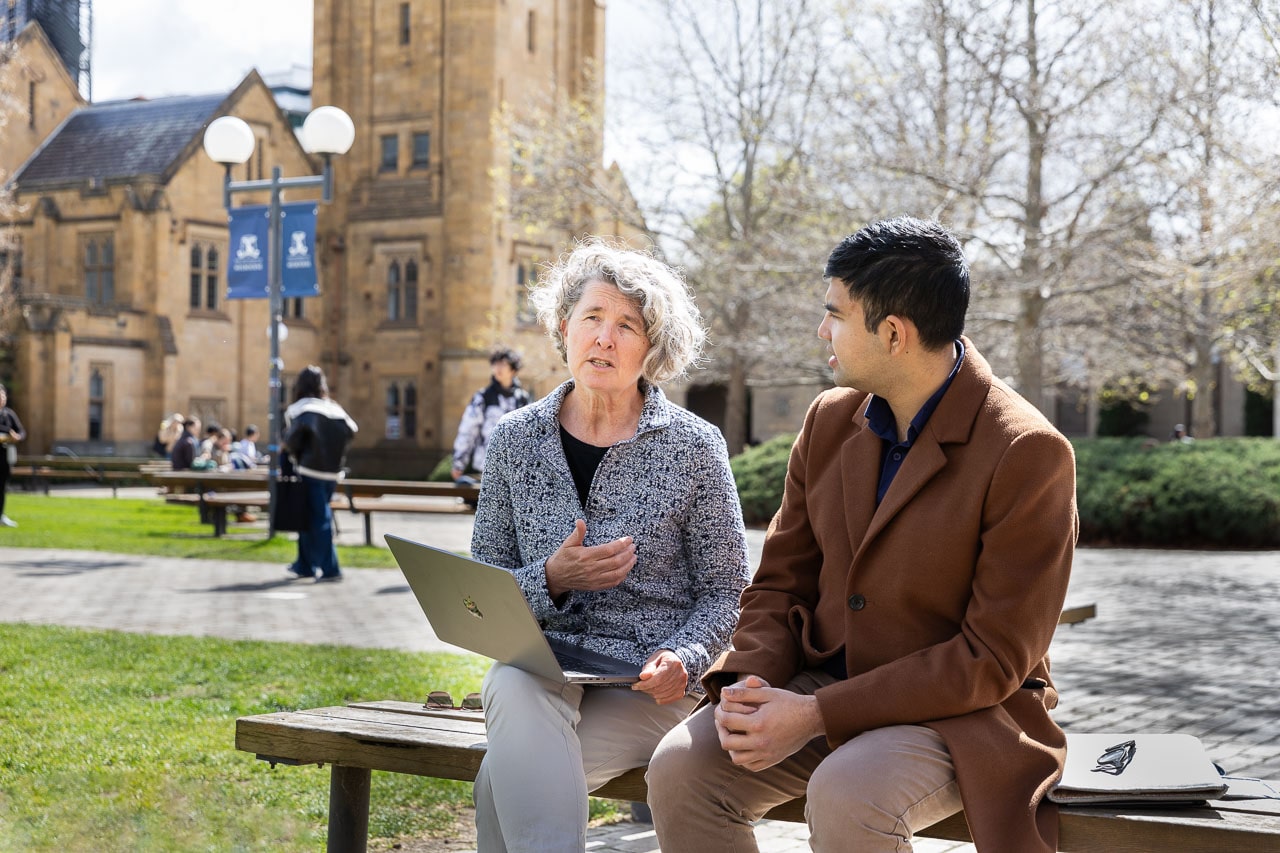
I’ve been employed by the University since 2000 and was the Doctor of Medicine course director for six years. I've always been in teaching and learning and have informally and formally mentored for many years. Everything we do [as mentors] is about student advocacy.
It was just the most amazing breath of fresh air when Farhan said, 'Actually, I don't want to be a doctor.' It was wonderful. I was thinking, 'Oh, this is exciting. Someone who wants to be a biomedical engineer!' Associate Professor Lisa Cheshire
The University of Melbourne academic mentoring program is well established and structured. As an academic, you have to express interest in being involved. Then, the faculty allocates you five or six students to mentor, hopefully across their whole undergraduate degree, if nothing goes astray! And because I was invested in the medical degree, I usually get students who are interested in being doctors.
I began mentoring Farhan in 2020 when he was a first-year student. We were in the depths of the pandemic, so our first meeting was on Zoom. I could see straight away he was an incredibly positive student. He was a spark of light.
And it was just the most amazing breath of fresh air when Farhan said, “Actually, I don't want to be a doctor.”
It was wonderful. I was thinking, “Oh, this is exciting. Someone who wants to be a biomedical engineer!”
Embarking bravely on a different path
The same year I started mentoring Farhan, the School of Biomedical Engineering and the School of Medicine were collaborating to create the intercalated Doctor of Medicine/Master of Biomedical Engineering program. It took an incredibly long time to work out how we could recognise some of the learning in the Doctor of Medicine and contribute that to the Master of Biomedical Engineering and vice versa. Back then I knew nothing about the biomedical engineering course…but I know everything about it now!
A lot of doctors want to understand the engineering and the systems around them, and a lot of engineers want to understand more about [the medical needs] they're developing products for. When the new Aikenhead Centre for Medical Discovery opens at St Vincent's Hospital later this year, engineers, doctors and students will be working very closely together in the same space. I think it's going to be a very popular pathway.
The first intake was planned for 2023, the same year Farhan was due to start a graduate degree. Naturally, I thought of him straight away – and the rest is history.
Farhan Islam
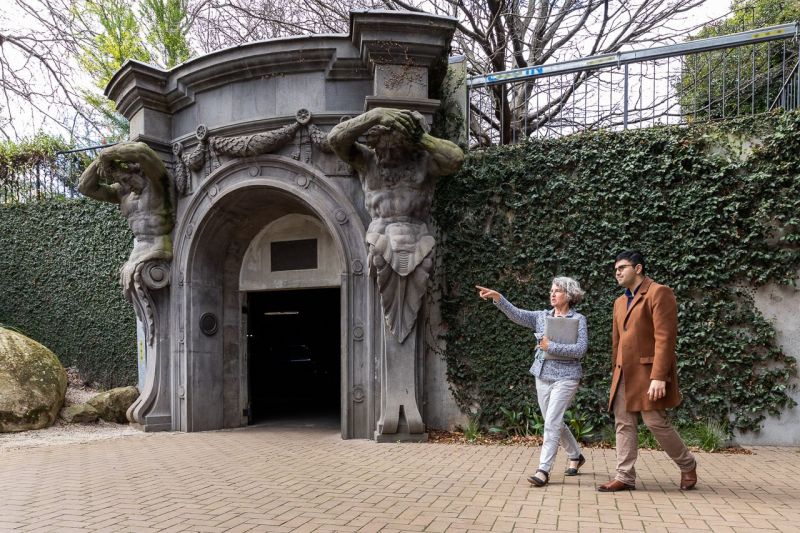
Farhan Islam (BBioMed 2022) is a third-year student in the Doctor of Medicine/Master of Biomedical Engineering program at the University of Melbourne. He will complete his studies in 2027.
Combining passions and some good advice
Throughout high school, I was very invested in science, technology, engineering and maths. I’d do science experiments at home and learn all these cool maths concepts. I was the stereotypical nerd, but a proud one!
My family is from Shepparton, so I also have a rural background. Towards the end of high school, I discovered biomedical engineering, and I thought, ‘Hey, this is the perfect amalgamation of all my passions.’ I guess I had this sense – rather misguided – that there was less problem-solving and critical thinking involved in medicine. I thought it was just being a mindless robot, just memorising medical facts. Now I realise that couldn't be further from the truth.
My dad, who is a GP, would gently inform me that I was being somewhat naive. He would always tell me, ‘You should really consider this career. I think it'd be very good for you. You're good with people.’ So, I always kept my dad's advice in the back of my head.

A smooth transition to university
When you enter the Bachelor of Biomedicine degree for the first time, it's such a massive transition. It's a complete paradigm shift. I wasn’t expecting to have a mentor, but access to someone who had a wealth of experience in dealing with students and all of our qualms and questions was a blessing.
Talking with Associate Professor Cheshire always felt very natural, it was always an easy, free-flowing conversation. It's very nice to know that the faculty are concerned and want to make sure that everyone's doing okay. It definitely emphasises a sense of togetherness and a collective desire to see this through and band together.
Finding a calling
At the end of my undergraduate degree, I was lucky to gain admission to the Doctor of Medicine, but I also found out that because I’d majored in Bioengineering Systems I was also eligible for the new intercalated pathway. It was just very fortunate that I had Associate Professor Cheshire as my mentor, because it planted the seed nice and early. It gave my subconscious some time to process that and consider, ‘Is this a viable option?’
What drew me to this course is that I can combine these passions and see both fields playing out in the same setting. For example, I was in the cardiac lab at St Vincent's today and I saw a pacemaker being implanted transcutaneously. They put a catheter in the femoral artery and then a pacemaker in the septum between the two ventricles of the heart. It was just a perfect example of seeing engineering in a clinical setting. It was majestic.
I'm very grateful to Associate Professor Cheshire. Her advice was influential. I want to thank her for her guidance because now I just can’t see myself doing anything else. It's fantastic. Farhan Islam
Our students are deciding their future career in medicine now. Volunteer to mentor a current student in 2026.