Welcome to the Baker Department of Cardiometabolic Health
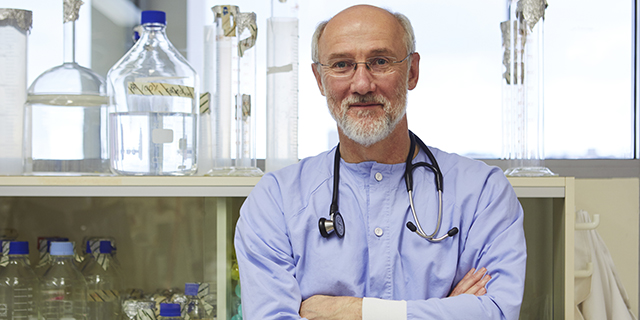
Professor Karlheinz Peter, Head of Department.
The Baker Department of Cardiometabolic Health is an exciting new collaboration between the Melbourne Medical School and the Baker Heart and Diabetes Institute. This initiative will leverage both organisations’ strengths in cardiometabolic capabilities.
Diversity and Inclusion
The Melbourne Medical School is proud to foster a vibrant and inclusive culture delivering initiatives that value and support diversity.


Honours & Graduate Research Opportunities
See our project guide for a wide range of available Honours and Graduate projects.
Whether you're just starting out or a seasoned professional, we have something to suit your needs and schedule. With the highest teaching evaluations in the Faculty of Medicine, Dentistry and Health Sciences we are proud to offer our coursework and short course programs to our leaders and future leaders.
Featured content
-
Doctor of Medicine
The Melbourne MD is the University’s flagship medical program — academically rigorous, clinically immersive, and research-informed.
-
Graduate Coursework
The University of Melbourne’s industry-led, research-informed, globally transformative education prepares students from all backgrounds to make a difference to community health and wellbeing by advancing the most important health challenges of a changing world.
-
Research Degrees
Whatever your passion, the University of Melbourne offers stimulating graduate research degrees, including PhDs, and the support you need to pursue them.
Featured content
-
Short Courses
Our short courses are designed to keep you up to date with the latest research and information.
-
Scholarships, Bursaries and Prizes
The Faculty of Medicine, Dentistry and Health Sciences offer an extensive range of scholarships and bursaries to undergraduate and postgraduate coursework students.

Clinical Electives
View further information for non-University of Melbourne medical students who wish to undertake a clinical elective with one of our hospital partners.
Clinical Schools
The Doctor of Medicine (MD) has been designed to train doctors who have the skills, attributes, passion and competency to make a positive and immediate contribution to health locally and internationally. Integral to your study is the teaching and clinical training you will experience at the University of Melbourne's clinical schools located in affiliated teaching hospitals.
Each of our clinical schools offers our students a unique experience, whilst delivering the same MD curriculum to provide a first-class medical education.
Region Preferences
Applicants invited to a Multi Mini Interview (MMI) for a place in the Doctor of Medicine will be asked to identify their preference for a particular Clinical School region.
The information below should assist applicants in making these decisions.
During the first year of the MD, students are allocated to one of these clinical schools for the final three years of the course (with the exception of non-Rural Pathway Rural Clinical School students who may have the opportunity to be re-allocated after completion of Year 2). Acceptance of a place in the medical course indicates acceptance of a place in a particular clinical school region and subsequent clinical school placement.
The University of Melbourne is a globally engaged, comprehensive, research-intensive university uniquely positioned to respond to the major social, economic and environmental challenges of our time.
Featured content
-
Research Themes
Our research is encompassed within several broad research themes. This multidisciplinary approach aims to increase the opportunities for researchers to collaborate on projects that span common themes.
-
Research Groups
An overview of the research interests within the department and the project work being carried out by our research groups.
Graduate Research at MDHS
A resource for students and supervisors seeking up to date information about policies and procedures
📣 ACADI September Seminar: Beyond Labels: Understanding Diabetes Heterogeneity in Youth and Young Adults
Join us in September as Prof. Jencia Wong presents Beyond Labels: Understanding Diabetes Heterogeneity in Youth and Young Adults.
This seminar will explore the diverse ways diabetes presents in youth and young adults, drawing on clinical experience and emerging research. Prof. Wong will discuss early‑onset type 2 diabetes, atypical overlap syndromes, and type 1 diabetes complicated by obesity.
The session will consider how recognising this complexity can influence diagnosis, treatment pathways, and models of care for younger populations.
In this seminar, Prof. Wong will explore:
🔍 The heterogeneity of diabetes in young people
💡 Early‑onset type 2 diabetes, atypical overlap syndromes, and type 1 diabetes with obesity
🩺 How complexity shapes approaches to diagnosis and care
📊 Reflections on emerging research informing clinical practice
About our speaker:
Professor Jencia Wong is a Senior Staff Specialist Endocrinologist and Director of Research at Royal Prince Alfred Hospital, and a Clinical Professor at the University of Sydney. She is recognised for her expertise in diabetes heterogeneity, with a focus on youth‑onset type 2 diabetes, gestational diabetes, and atypical diabetes syndromes.
📅 Time & date: 2–3pm AEST | Friday 18 September
📍 Online: via Zoom — link provided upon registration
🔗 Register here: https://go.unimelb.edu.au/woq2
Don’t miss this session and the opportunity to explore diabetes heterogeneity in youth and young adults.