Psychiatry
Ensuring that people who live with mental illness receive the necessary care and support to lead fulfilling lives through research and ongoing advancements in mental health care.
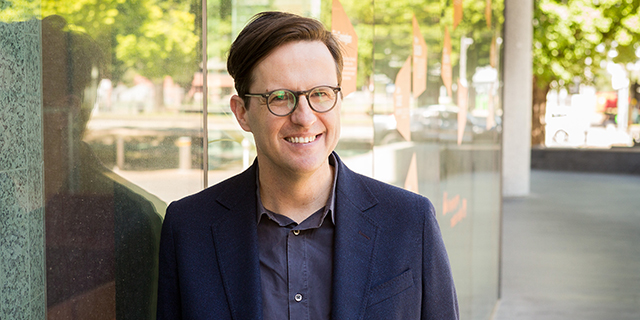
Welcome to the Department of Psychiatry
Professor Christopher Davey
The Department of Psychiatry has a leading role to play in creating the best possible care through research, teaching and clinical translation. We partner with people impacted by mental illness to inform our teaching and research. Our impact translates to better lives and better communities.
Department of Psychiatry Clinical Hubs
The Department is located at seven clinical hubs across metropolitan Melbourne. We are dedicated to research that advances the understanding and treatment of mental illnesses, and that enhances the quality of life of people affected by them.


Clinical Psychiatry Course
The Department of Psychiatry is proud to introduce the Clinical Psychiatry Course, a newly accredited, non-award program designed to strengthen the preparation and professional readiness of future psychiatrists.
Download the Clinical Psychiatry Course brochure
Master of Psychiatry
With the growing need to enhance the delivery of psychiatric care across diverse communities, the University of Melbourne delivers the world-class Master of Psychiatry in a wholly online format.
Download the Master of Psychiatry brochure.
Research Themes

Neuroscience in Ageing
Our research focuses on advancing knowledge that supports mental and cognitive health in middle age and later life. We focus on clinically grounded, collaborative, and translational research aiming to prevent, detect, and improve cognitive and mental health in people as they age, while reducing stigma and discrimination. Our work is informed by real-world needs and leads to improved wellbeing for ageing and older adults.

Mood, Anxiety and Trauma
The Mood, Anxiety and Trauma team conducts world-leading research on mood disorders, anxiety, and trauma-related conditions. Our multidisciplinary teams use innovative clinical, neurobiological, and translational approaches to develop evidence-based interventions and personalised treatments. Through local and global collaborations, our research directly informs clinical practice and mental health policy. Learn more below.

Neuropsychiatry
We undertake cutting-edge research of neuropsychiatric disorders, focusing on psychoses, functional neurological disorders, and neurological disorders manifesting psychiatric symptoms. We explore aetiology, mechanism, biomarkers, and treatment, using novel methods in neuroimaging, neuroscience and clinical trials. We aim to improve understanding and treatment, to improve outcomes for patients and their families.

Systems Neuroscience
The Systems Group pioneers integrative brain research to transform the understanding and treatment of psychiatric disorders. Using advanced imaging techniques, we study brain networks across scales, from cells to systems. Our vision bridges disciplines to drive breakthroughs in therapies, exploring frontiers like connectomics, brain-body dynamics, stem cells and next-generation neurostimulation. (Image Courtesy of C. Hoffmann).

Health Policy and Systems Science
The Health Policy and Systems Science (HPSS) research theme focuses on designing and testing new models of operation and care within mental health systems, trauma and injury compensation systems, disability systems, and social insurance systems. We approach research questions in these areas through a data-informed and systems science lens, helping decision and policy-makers to understand the drivers of performance for the people and communities they serve.
Early-mid Career Researcher
A resource for early-mid career researchers to collaborate and network.

Research Participants
The Department of Psychiatry is currently seeking research participants for a number of studies.
Graduate Research resources
A resource for students and supervisors seeking up to date information about policies and procedures.
Discover more about the Department of Psychiatry's research training and resources.
This page lists studies for which we are currently seeking participants.
-
The AMPA-VEGA 1 study for depression
-
The Kite trial: Living with bipolar depression?
-
Do you believe you may have developed PTSD after a traumatic or stressful event?
-
Interested to know more about how your brain works? Join our brain imaging study
-
Do you suffer from Posttraumatic Stress Disorder (PTSD)? Join the STOP Trial
-
Join the PoET study: Do you have fear of being judged by others or are self-conscious in everyday social situations?
-
Live in rural or regional Australia and feel your memory has worsened?
-
Are you experiencing symptoms of low mood or depression?
-
Have you been diagnosed with treatment resistant depression?
-
The STRAND Project: Are you experiencing symptoms of binge eating disorder?
-
A new treatment for depression
Department of Psychiatry Courses
Discover more about the courses and training available across the Department of Psychiatry, including short courses, award and non-award options.
Featured content
-
Master of Psychiatry

Make and impact and study Master of Psychiatry with the University of Melbourne (RANZCP FEC).
-
Clinical Psychiatry Course

Discover more about the Clinical Psychiatry Course, our new non-award course (RANZCP FEC).
-
Doctor of Medicine

During the third year of the Doctor of Medicine, students undertake rotations in various specialties, including mental health.
-
Meet the team

Get to know our dedicated teaching team within the Department of Psychiatry.
Professional Development and Short Courses
Clinical Psychiatry Course
The Department of Psychiatry is proud to introduce the Clinical Psychiatry Course, a newly accredited, non-award program designed to strengthen the preparation and professional readiness of future psychiatrists.
Download the Clinical Psychiatry Course brochure.
Master of Psychiatry
With the growing need to enhance the delivery of psychiatric care across diverse communities, the University of Melbourne delivers the world-class Master of Psychiatry in a wholly online format.
Download the Master of Psychiatry brochure.
What is the right course for you?
The University of Melbourne offers two options that fulfil the RANZCP requirements for a Formal Education Course (FEC); Master of Psychiatry and the Clinical Psychiatry Course. So, what’s the difference? Both provide high-quality psychiatric education, but they offer different learning experiences. The comparison below may help you decide which course is right for you.
-
Master of Psychiatry (MPsych)
Clinical Psychiatry Course (CPC)
Master’s Degree Non-award education course -
Master of Psychiatry (MPsych)
Clinical Psychiatry Course (CPC)
3 years 3 years -
Master of Psychiatry (MPsych)
Clinical Psychiatry Course (CPC)
Asynchronous, 100% online
All learning can be completed in your own time and at a location of your choosing.
Synchronous, hybrid
All learning takes place during scheduled weekly sessions, in person at Parkville or online.
-
Master of Psychiatry (MPsych)
Clinical Psychiatry Course (CPC)
Maximum flexibility
Students can engage with the material around their clinical and personal commitments.
Protected learning time
For RANZCP trainees, the weekly sessions forms part of the designated training half-day.
-
Master of Psychiatry (MPsych)
Clinical Psychiatry Course (CPC)
Formal academic assessment
Examinations, coursework, and participation in discussion boards. Webinars are offered but attendance is optional.
No formal assessment.
The only course requirement is minimum 75% attendance.
-
Master of Psychiatry (MPsych)
Clinical Psychiatry Course (CPC)
First year: $11,936
Indicative total course fee: $39.509
First year: $3,500
Total course fee: $10,500
-
Master of Psychiatry (MPsych)
Clinical Psychiatry Course (CPC)
- You value academic rigour and scholarship; you want to develop an academic profile.
- You want an internationally recognised Master level qualification from an internationally leading university.
- You want to develop your research skills and have access to research expertise and mentorship, through the capstone research subject
- You want to explore areas beyond your day-to-day clinical work; the elective semesters allow you to pursue particular interests such as perinatal, psychodynamic, forensic, and transcultural psychiatry.
- You value structured, interactive learning.
- You want a high-quality FEC without the additional assessment burden of a Master’s degree.
- You value learning with your peers; weekly synchronous teaching gives you opportunity to build relationships with colleagues across different health services.
- You value in-person learning and protected teaching time.
- You want an accessible and cost-effective pathway through FEC requirements at a competitive price.
-
Master of Psychiatry (MPsych)
Clinical Psychiatry Course (CPC)
“I loved the intellectual depth, and high academic standards of the course. It exposed me to opportunities for research with senior psychiatrists across Australia”.
“I have really enjoyed all aspects of the course. I feel that the content is delivered at an appropriate level for my stage of training”.
“Great to go in person, presenters were great, very engaging”.
Career Outcomes
As a graduate of this course, you’ll have gained sufficient theoretical and clinical knowledge to sit and pass the exams required by RANZCP.
Graduates of the Master of Psychiatry have gone on to have highly successful clinical careers and the vast majority have gone on to become consultant psychiatrists across Australia and internationally.
Dr Rahul Khanna
Dr Rahul Khanna is a practicing psychiatrist, researcher and academic entrepreneur based in Melbourne, Australia. His experience spans public and private sector clinical work with a focus on psychological trauma, specifically in veterans and first responders.

Michael
Michael’s journey in psychiatry began at the University of Melbourne, where he completed his Bachelor of Science, Bachelor of Medicine and Bachelor of Surgery (MBBS), and Master of Psychiatry. His education provided essential knowledge and connected him with leading experts and fellow students.

Foundations of International Psychiatry
Mental health is an important public issue across the world, and the role of the psychiatrist is crucial in helping to address these. This course aims to give you a more nuanced understanding of the role of a psychiatrist, developing clinical skills and therapeutic relationships. Understanding the impact of mental illness in society and ethics in medicine are some of the key themes central to this course.

Treatment Resistant Schizophrenia
Update your knowledge and clinical skills to provide higher quality patient care to people with treatment-resistant schizophrenia.
Doctor of Medicine
During the third year of the Doctor of Medicine, students undertake rotations in various specialties, including mental health.
Thank you for engaging with the Faculty of Medicine, Dentistry & Health Sciences. As a friend and supporter of this faculty you will help create scholarships for our students, support groundbreaking research, and build important partnerships and support community engagement.

Honorary Appointments
Information on applying for an Honorary appointment in the Department of Psychiatry.
Teaching Opportunities
Learn more about the educational and mental health professional development opportunities in the Department of Psychiatry.


Internal Grant Opportunities
Learn more about the fellowship and scholarship opportunities in the Department of Psychiatry.
Featured content
-
Alumni
Our pride in our graduates and in their lives spent improving the health and well-being of others is matched by our desire to maintain strong connections with all who have passed through our doors.
-
Support
We are grateful for the many ways in which our alumni and donors support the work of the Faculty.
-
Diversity and Inclusion
The Melbourne Medical school is proud to foster a vibrant and inclusive culture delivering initiatives that value and support diversity. Please contact our department representative, Samantha Susa, for more information.