Transforming the field of diabetes and its complications with innovations for Indigenous and non-Indigenous Australians.
The Australian Centre for Accelerating Diabetes Innovations Research Centre (ACADI) was established through MRFF funding from the Australian Government’s Targeted Translation Research Accelerator (TTRA) program, delivered by MTPConnect.
ACADI is a virtual collaborative diabetes centre uniting over 60 partners and supporters spanning all Australian States and Territories and 4 international sites. Led by Professor Elif Ekinci, Sir Edward Weary Dunlop Principal Research Fellow in Metabolic Medicine and Dame Kate Campbell Fellow at the University of Melbourne, ACADI includes Academic Partners, Advocacy Groups, Health Services and Industry Partners with a shared vision to benefit people with diabetes at each stage from diagnosis through to its devastating complications.
Our purpose is to deliver novel interventions for timely diagnosis, prevention and treatment of diabetes and its complications. Our research and development platform, national training program, and sustainable model will increase quality of life and life expectancy for all Australians living with diabetes and its complications. Furthermore, ACADI specifically addresses equity in diabetes related healthcare with targeted initiatives to ensure all Australians, regardless of their geographic location or cultural background, have equal access to innovative products and clinical trials.
Our diverse portfolio of projects aligns with our three Priority Areas:
1. Diabetic kidney disease
2. Peripheral neuropathy and diabetic foot syndrome
3. Short-term complications of hypoglycaemia and/or hyperglycaemic hyperosmolar syndrome (HHS) and ketoacidosis


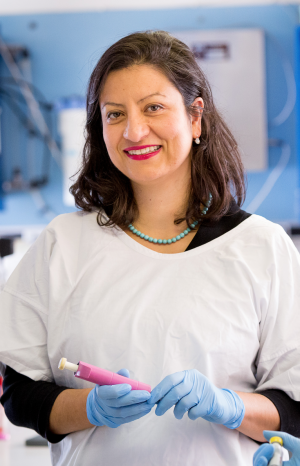 I am delighted to welcome you to ACADI - The Australian Centre for Accelerating Diabetes Innovations Research Centre.
Globally, almost 500 million people live with diabetes with 51% more people expected by 2045. ACADI is uniquely positioned to improve the lives of millions of people in Australia and overseas, and to set Australia as a global leader in innovations for diabetes.
I am fortunate to be surrounded by an incredible team to drive change. Deputy Director of ACADI, Professor David O'Neal, will support our translational research and training activities. Furthermore, our Priority and Platform Leads are world-class clinician researchers that have worked collaboratively for many years and will provide strong inclusive leadership for ACADI initiatives. Our research portfolio will be supported by our Advisory Groups including an Independent Scientific and Commercialisation Advisory, International Advisory, Indigenous Advisory and Consumer Advisory groups.
We are united in our passion to transform the lives of people with diabetes and committed to ensuring access and equity in healthcare services, innovative treatment, and novel interventions. We are focused on building sustainable capacity with the support and development of emerging leaders in the diabetes field. Our comprehensive training program, led by Associate Professor Sarah Glastras, will support multiple PhD students and early career researchers (ECRs). To ensure cultural diversity, we have specifically earmarked PhD stipends and ECR awards for Indigenous Australians.
We anticipate ACADI will deliver sustained outcomes including:
- Increased human capital skilled in translational research, accessible to Australian industry and health services
- Increased access to cutting-edge interventions for people with diabetes
- New and enhanced partnerships between industry, academia and health services generating broader economic outcomes, including education and training exports
- Improved experience, care, and safety for people with diabetes and increased effectiveness and efficiency of health service delivery
We are excited to lead this change in diabetes and its complications and we warmly welcome you to explore our ACADI initiatives and projects within this website.
Professor Elif Ekinci
ACADI Centre Director

ACADI is a new MRFF Targeted Translation Research Accelerator focused on delivering novel interventions in the diagnosis, prevention and treatment of diabetes and its complications.
ACADI currently includes 18 projects, aligned with our three priority areas. Our project leads are Australia-based to maximise local benefits; however, our valuable international collaborators will assist with conducting multicentre studies.
ACADI Training Program
ACADI’s Training Program will train current and future leaders in innovation and provide participants with critical skills in commercialisation, clinical trial design, and translation, combined with diabetes knowledge from consumer, clinical and regulatory perspectives. ACADI graduates will form a national network of innovators, maintaining connections via ACADI alumni which will offer opportunities for ongoing knowledge development.
About
ACADI partners participating in the Training Program will be networked with ACADI researchers and platforms, clinicians, healthcare professionals, clinical facilities, and patients to deliver multi-site trials across diverse communities.
Our Training Program will benefit from ACADI’s innovators from industry, research, health services and community developing creative solutions by addressing the complex challenges associated with healthcare innovation and translation. Our initiatives include:
1. Building translational research capability and expertise. ACADI will support new PhD and early career researcher (ECR) Fellowship opportunities. Aboriginal and Torres Strait Islander skills development and training will be supported through reserving PhD and ECR opportunities. The training program will cover commercialisation and research translation. Regular seminars, project presentations, and guest speakers will facilitate knowledge and idea sharing. Find free resources and training in the ACADI Training Resource Library.
2. Professional development activities for clinicians, researchers, and students.
3. Mentoring and masterclasses will be provided to ensure research projects are end-user focused and have commercial potential to build confident, knowledgeable and well-networked future leaders in diabetes.
ACADI Grants
ACADI HealthTech Innovation Challenge
Find out more and apply
ACADI Mentoring Program
Navigating the early stages of a research career can be a challenge. The ACADI Mentoring Program supports PhD candidates and early- to mid-career researchers working in diabetes‑related research to progress towards their career goals and amplify their impact.
Find out more and apply
ACADI Training Program Team
Training Lead
Associate Professor Sarah Glastras (endocrinologist), is an experienced early to mid-career clinician scientist, who will oversee the program together with a team of training advisors from each state and territory
ACADI Training Program Manager
Imbi Knappstein
Australian Diabetes Clinical Trials Network
Sign up to ADCTN News
Now Reviewing Protocols: Investigator-Initiated Trials
ADCTN clinical trial support is now open for submissions
We’re excited to share that the Australian Diabetes Clinical Trials Network (ADCTN) is now accepting protocol submissions for review and endorsement for investigator-initiated trials.
Led in partnership by Diabetes Australia and the Australian Centre for Accelerating Diabetes Innovations (ACADI), ADCTN supports investigator-initiated clinical trials by offering free, structured feedback from leading diabetes researchers and people with lived experience.
ADCTN offers two tailored review pathways:
- Expert Review & Feedback – ideal for protocol refinement ahead of ethics or funding submission
- Formal Endorsement – including presentation to the ADCTN Executive Committee and a Letter of Endorsement if approved
Please read the guidelines for details on processes including key dates.
Ready to submit your protocol for review? Ensure you have carefully read the guidelines and submit your protocol together with the completed checklist to ADCTN-info@unimelb.edu.au before the submission deadline (see guidelines for dates).
For more information, or if you have any questions, feel free to reach out to us at ADCTN-info@unimelb.edu.au.
** Please note - ADCTN is currently not accepting Industry trial protocols for review. This is expected to start in late 2026, with an associated fee.
Launch of the ADCTN
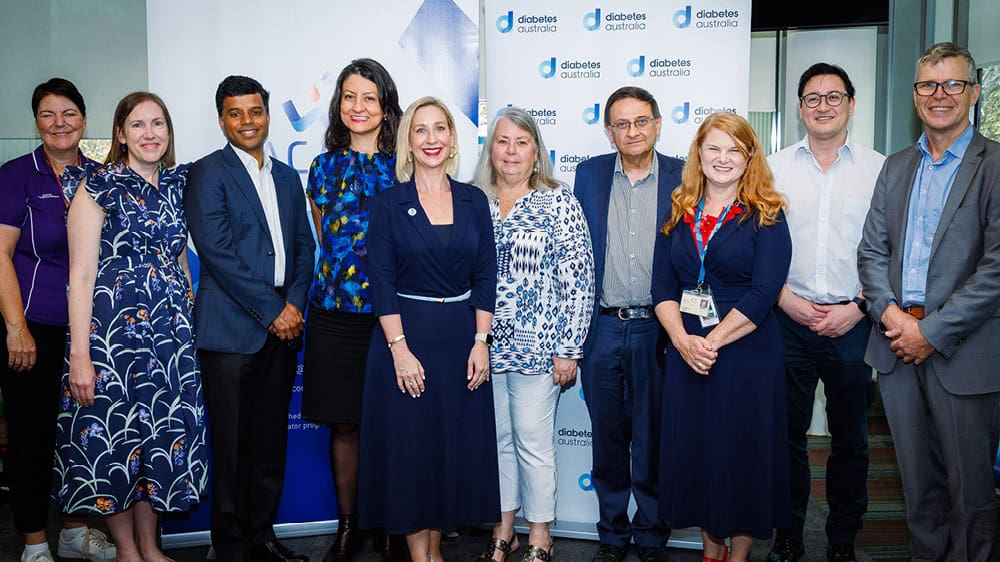 Image: (L-R) Keren Pointon, Dr Lisa Hayes, Dr Anish Menon, Prof Elif Ekinci, Justine Cain, Susan Kozij, Prof David O’Neal, Prof Josephine Forbes, Prof Grant Brinkworth, Andrew Bowskill
The ADCTN was launched on September 3, 2024 in Brisbane.
A groundbreaking new collaboration in diabetes research announced in Brisbane will improve outcomes for people living with diabetes.
ACADI and Diabetes Australia have joined forces to announce the Australian Diabetes Clinical Trials Network (ADCTN), a research initiative designed to increase the number of diabetes clinical trials in Australia.
Diabetes Australia Group CEO Justine Cain said clinical trials are a cornerstone of medical research and innovation because of their real-world application.
“People living with diabetes are at the heart of everything we do,” Ms Cain said.
“Clinical trials ensure that new treatments deliver real benefits to people, while also identifying any potential risks or side effects.
“Our new network will increase the number of diabetes clinical trials being funded and conducted in Australia. This will make a huge difference in the lives of people living with diabetes because it means new and innovative treatments and interventions can be tested and hopefully become available.”
ACADI director and head of Medicine at Melbourne University, Professor Elif Ekinci, said the network will support diabetes researchers by providing expert review and feedback of clinical trial protocols and grant funding applications.
“Clinical trials are essential to inform new ways to prevent, detect, or treat diabetes,” Professor Ekinci said.
“By advancing our understanding of how different treatments work and evaluating their impact, clinical trials play a crucial role in improving the care of people living with diabetes. Their results contribute to the development of more effective, safer healthcare options and help inform evidence-based practices in medicine.”