Surgery at Otolaryngology
About Us
The Department of Surgery, Otolaryngology team continues to innovate surgical practice in ear surgery (otology) and cochlear implantation, facilitated by its strategic location at The Royal Victorian Eye and Ear Hospital.
We interface lab-based and clinical research, producing highly productive translational research outcomes. We are at the forefront of research into cochlear implantation and the preservation of hearing and balance function during inner ear surgery.
Our laboratory research aims to understand the biological response of the inner ear to surgery and other types of stress, and applies drug delivery, gene therapy, and regenerative strategies to protect and restore hearing and vestibular function.
Recent highlights include the progression of our work on cochlear protection through steroid delivery to the ear from the laboratory to regulatory trials sponsored by Cochlear Ltd. This reflects 20 years of research progress, during which the Department has maintained its international prominence.
Preventing hearing loss and cochlear implantation
The Otolaryngology teams primary focus is on researching approaches to operate on the inner ear without damaging it. This is the key to saving natural hearing during cochlear implantation, and the foundation for emerging regenerative treatments of deafness and drug delivery to the inner ear. The work covers a broad program – basic sciences, preclinical research and clinical studies. Our latest innovation in drug delivery has been recognised by an NHMRC Development Grant “DaWinCI” with Cochlear Ltd from 2026-2028, and a Conjoint Grant with the Passe Williams Foundation.
The Department’s novel method for sampling inner ear fluids for the detection of drugs or other biomarkers has shown microRNA signatures unique to specific cochlear implant outcomes.
In collaboration with colleagues from the Hong Kong Polytechnic University, we have now demonstrated that flexible polymeric optical fibres can accurately measure the position of therapeutic devices entering the inner ear, such as cochlear implants. This has been achieved without changing the mechanical properties of the implants significantly. The team was awarded a Gold Medal at the International Exhibition of Invention in Geneva for groundbreaking intellectual property in this space.
We have a significant focus on applying our intraoperative monitoring techniques to Cochlear Ltd’s precurved Slim Modiolar cochlear implant electrode. This involves measuring hearing during implant surgery and determining how specific electrode movements and surgical manipulations affect natural hearing. We have discovered that the “rules” governing monitoring are unique to each cochlear implant electrode design. This will guide future surgical practice for patients who still have residual acoustic hearing. This work has been awarded an NHMRC Development Grant “Hear Alert” together with Cochlear Ltd between 2026-2028.
Our Academic Lead
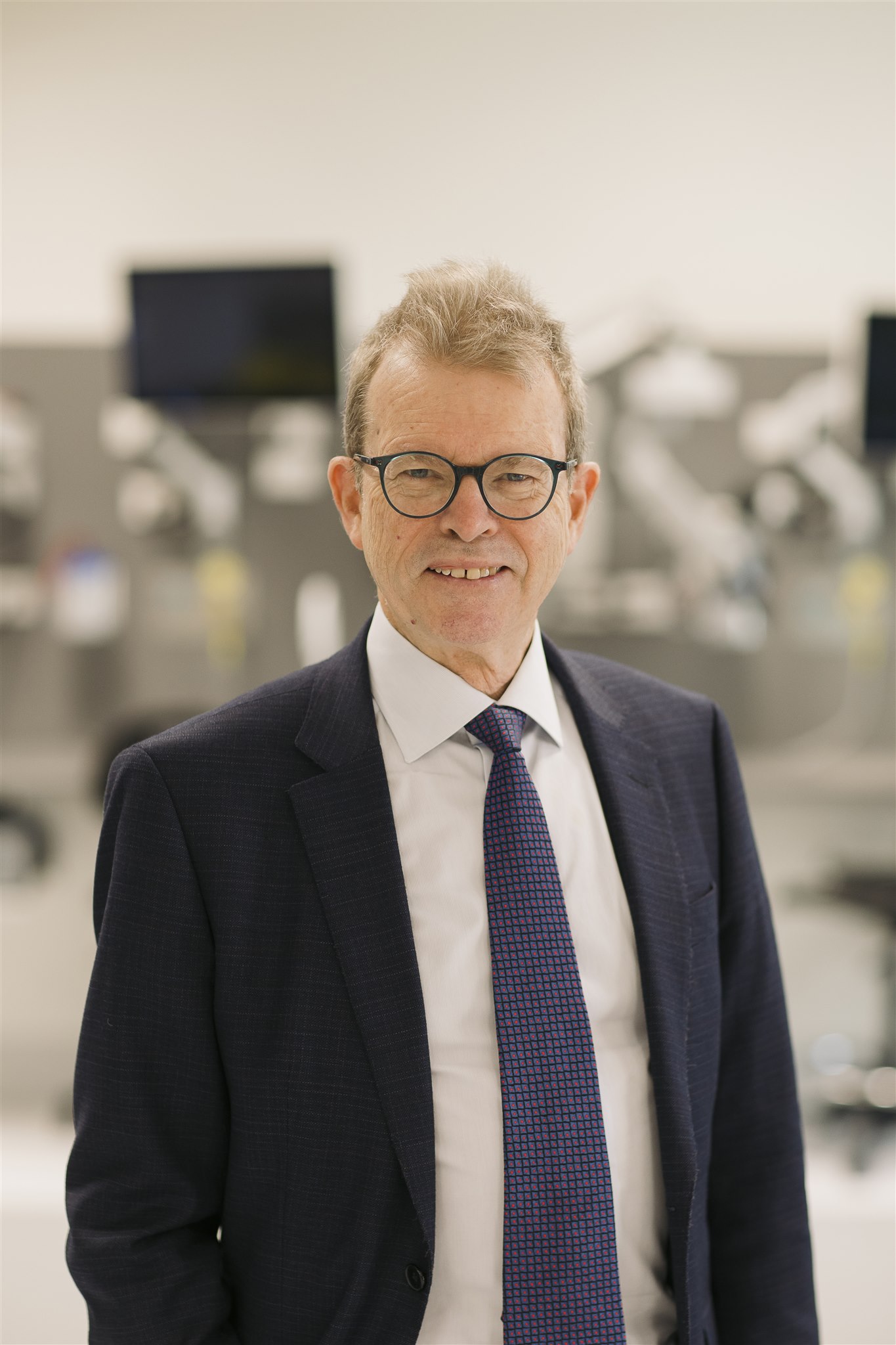
Professor Stephen O’Leary holds the William Gibson Chair of Otolaryngology at the University of Melbourne and is a Senior Specialist in the Otology and Cochlear Implant Clinics at the Royal Victorian Eye and Ear Hospital. His interests include inner ear function and protection in surgery, cochlear implantation, drug delivery to the ear and surgical simulation. Professor O’Leary is a Practitioner Fellow of the National Medical Research Council (Australia), and dedicates his time to both research into Otology and surgical practice.
Key Research Areas
The direct interface that we have between lab-based or clinical research, and direct otolaryngology patient care leads to highly productive translational research outcomes. Laboratory research seeks to understand the biological response of the inner ear to surgery and other types of stress, and applies drug delivery, gene therapy and regenerative strategies to the protection of restoration of hearing and vestibular function. We have a strong track record in developing new therapies in the laboratories and bringing them to clinical trials.
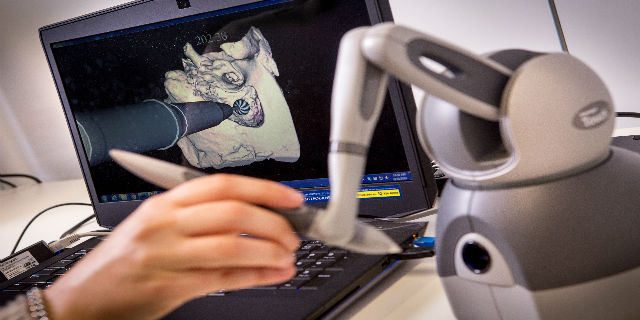
Otolaryngology is a leader in the application of Virtual Reality to surgical simulation, working closely with engineers and psychologists at the University, together with commercial partners to create sophisticated 3D rendered simulations that provide force feedback, and real-time training.
Otolaryngology has an interest in ear infection (otitis media) amongst Indigenous Australians, as this leads to early childhood hearing loss and contributes to disadvantage amongst these children. Our focus is upon large scale clinical trials.
Lead Researchers
Prof Stephen O'Leary
William Gibson Chair of Otolaryngology
Cochlear Implantation
Indigenous Ear Health
Virtual Reality Surgery Simulation
Email: sjoleary@unimelb.edu.au
Dr Christo Bester
Cochlear Implant Clinical Research Fellow
Email: christofer.bester@unimelb.edu.au
Dr Katherine Henshall
Senior Clinical Research Fellow (Neurophysiologist)
Email. k.henshall@unimelb.edu.au
Tayla Razmovski
Research Fellow
Email: ramovskit@student.unimelb.edu.au
Owen Burns
Research Fellow - Biomedical Engineering
Email: owen.burns@unimelb.edu.au
Ameila Darke
Clinical Trials Co-ordinator
Email: amelia.darke@unimelb.edu.au
Dimitria Stathopoulos
Senior Research Assistant
Email. dimitra@unimelb.edu.au
Dong Zhang
Histology
Email. dong.zhang1@unimelb.edu.au
Kate Brody
Research Assistant
Email. kbrody@unimelb.edu.au
Research Groups
Virtual Reality Surgery Simulation
Research Group Leader - Professor Stephen O'Leary
Indigenous Ear Health
Research Group Leader - Professor Stephen O'Leary
Hearing Neurosciences
Dr Karina Needham
Biomedical Engineering for Cochlear Implants
Research Group Leader - Dr Carrie Newbold
Facilities

Histology Services offered by the Department of Surgery/ Otolaryngology
Histology is the art of science creating beautiful sections of cells and tissue samples for microscopic analysis used for diagnostic or research purposes.
The Otolaryngology Histology service has over 16 years of experience in producing high quality sections for research purposes from a variety of samples embedded in resin, paraffin, frozen, or parlodion.
Our clients include research institutes, external clients both International and Australia wide, as well as other University research departments.
Our main discipline is cochlea histology, which is a quite a challenging structure to work on combining bone, neurons, and fine membranes all in one package.
The Services we can provide include: Processing, cutting, and staining of fixed tissue using a variety of different embedding media and microtomes.
Listed below are the pros and cons for each type of embedding media and associated tissue processing:
Spurr’s Resin – Great for morphology
- Cutting thickness is 2µm
- Can be processed for electron microscopy (EM)
- Histological stains only
Paraffin – Routine diagnostic method
- Cutting thickness between 5µm and 10µm depending on tissue type
- Histological or immunohistochemical stains are possible on these sections
Frozen - Less trauma to the tissue sample (no heat or harsh chemicals)
- Cutting thickness between 5µm and 20µm depending on tissue type
- Histological or immunohistochemical stains are possible on these sections
Parlodion – For larger specimens
- Cutting thickness is 20µm using a Sledge microtome
- Free floating sections
- Histological or immunohistochemical staining are possible on these sections
Vibratome – For 3D imaging
- Cutting thickness between 50µm and 200µm
- Free floating sections
- Immunofluorescence labelling are possible on these sections as whole mount
Histological staining completed by hand (not automatic stainer) and customized for each tissue sample to optimize the results. The stains we offer include the standard Haematoxylin and Eosin (H + E) stain, as well as special stains such as Gram, Thionin, Masson trichrome to name a few.
Training in some techniques are available and equipment such as the cryostat is available for hire (with training) to cut your own samples.
Contact Dong Zhang for a quote
Email. dong.zhang1@unimelb.edu.au
Laboratory Address
Royal Victorian Eye and Ear Hospital
Level 5 Peter Howson Wing (Blue Lifts)
32 Gisborne Street, East Melbourne,
Victoria 3002
Contact Us
Executive Assistant to Professor Stephen O'Leary
Cassandra Lewis
Email: cassandra.lewis@unimelb.edu.au
Ph: +61 3 9929 8366
Research Enquiries
Eastern Hill Graduate Research Team
Email: easternhill-gr@unimelb.edu.au
LOCATION:
Royal Victorian Eye and Ear Hospital,
Level 5 / 32 Gisborne Street,
East Melbourne, Victoria 3002